What are you looking for?

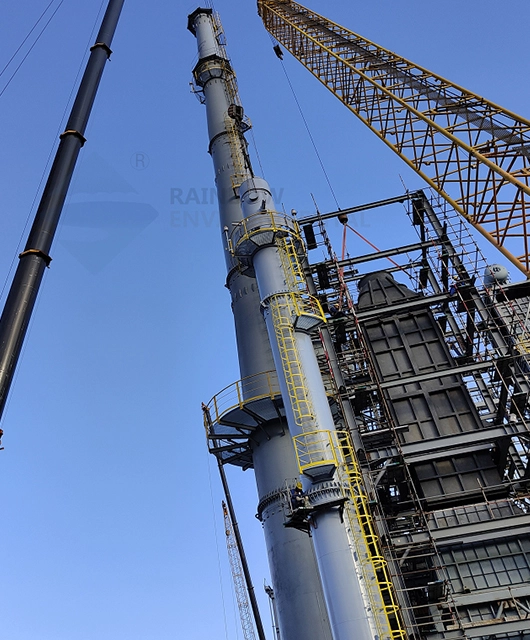
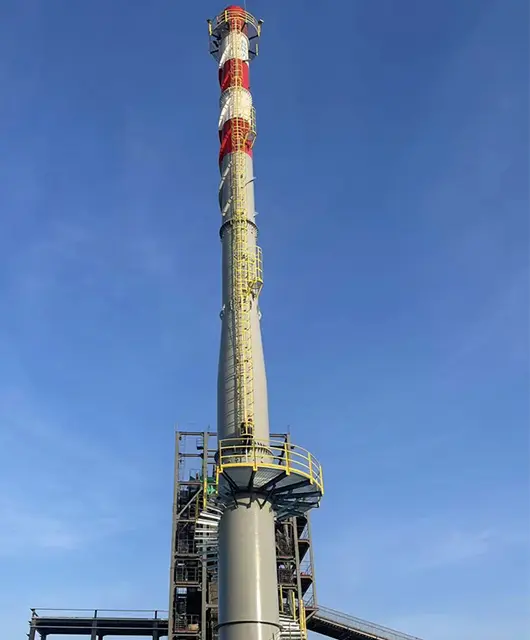
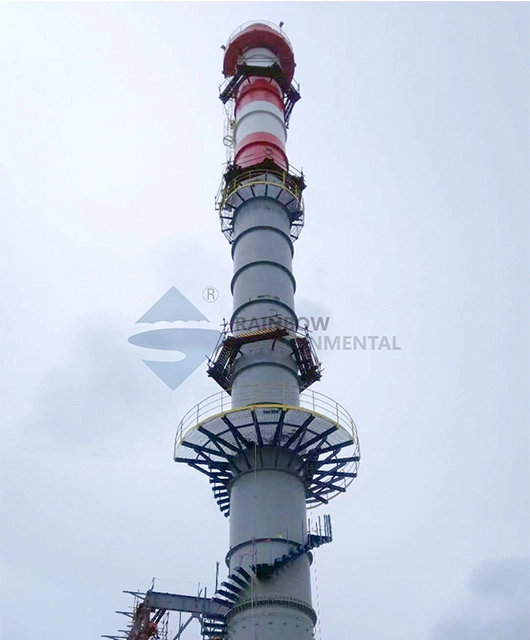
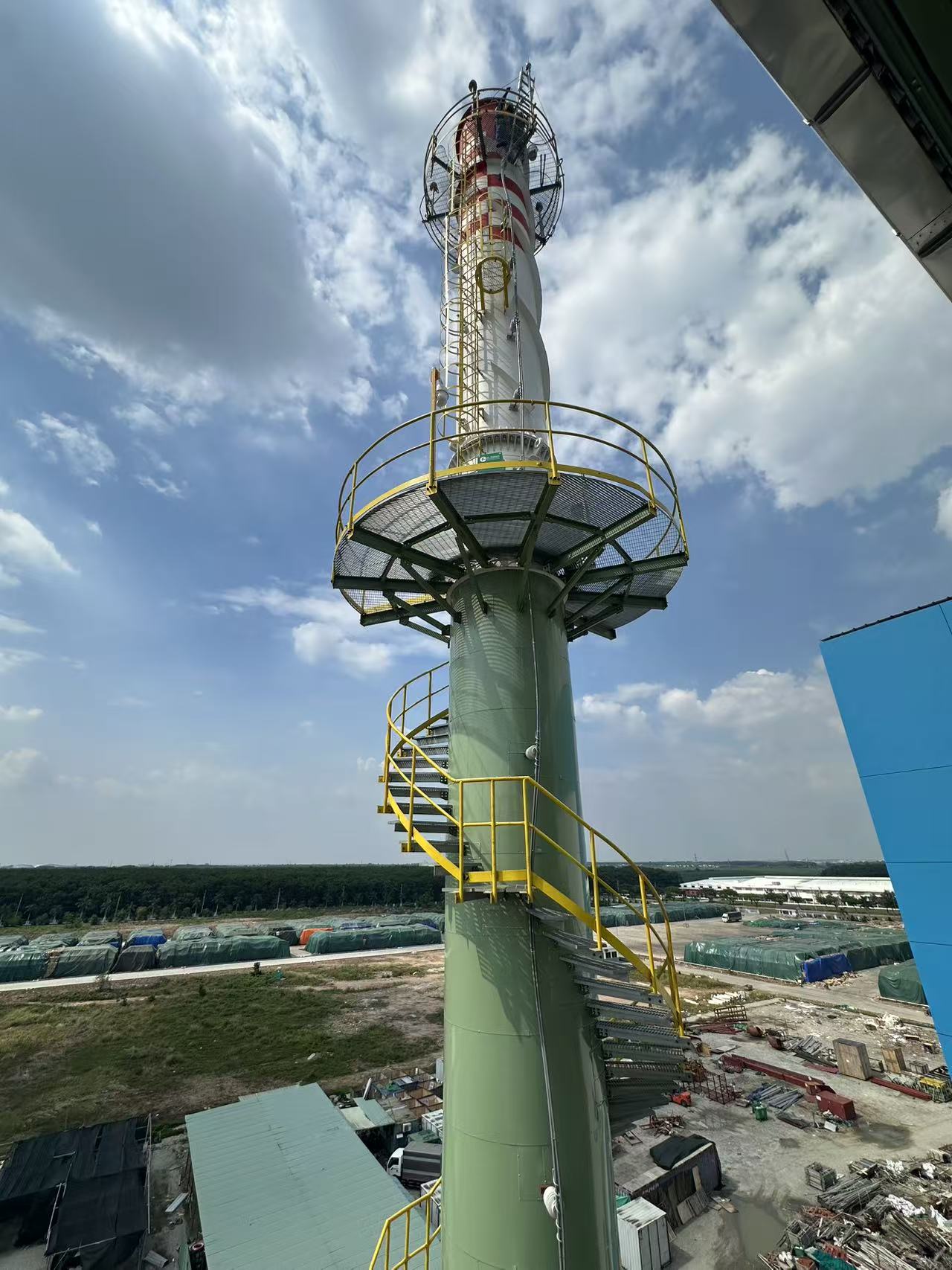
Rainbow supplied a 45-meter industrial steel chimney for the Phase III waste incineration system at Cheng Loong's Binh Duong paper mill in Vietnam. The single-flue chimney discharges treated flue gas from the environmental island system and combines a carbon-steel structural layer with a SUS316L stainless steel gas-contact layer. Rainbow's scope covered engineering design, manufacturing, testing, protective coating, packaging, transportation, and remote installation support.
The project involved one flue gas purification system for the paper mill's No. 2 waste residue incinerator. The treatment system was designed to remove dust, sulfur dioxide, HCl, NOx, dioxins, and heavy metals before the treated gas entered the chimney for discharge.
Project Parameter | Specification |
Project location | Binh Duong, Vietnam |
Industry | Pulp and paper |
Application | Waste incinerator flue gas discharge |
Chimney type | Single-flue steel chimney |
Chimney height | 45 m |
Internal diameter | 3,400 mm at bottom; 1,800 mm at top |
Operating flue gas temperature | 130°C |
Design temperature | 150°C |
Structural material | Q355B / Q235B |
Gas-contact layer | 3 mm SUS316L stainless steel |
Design service life | 25 years |
Structural safety class | Class II |
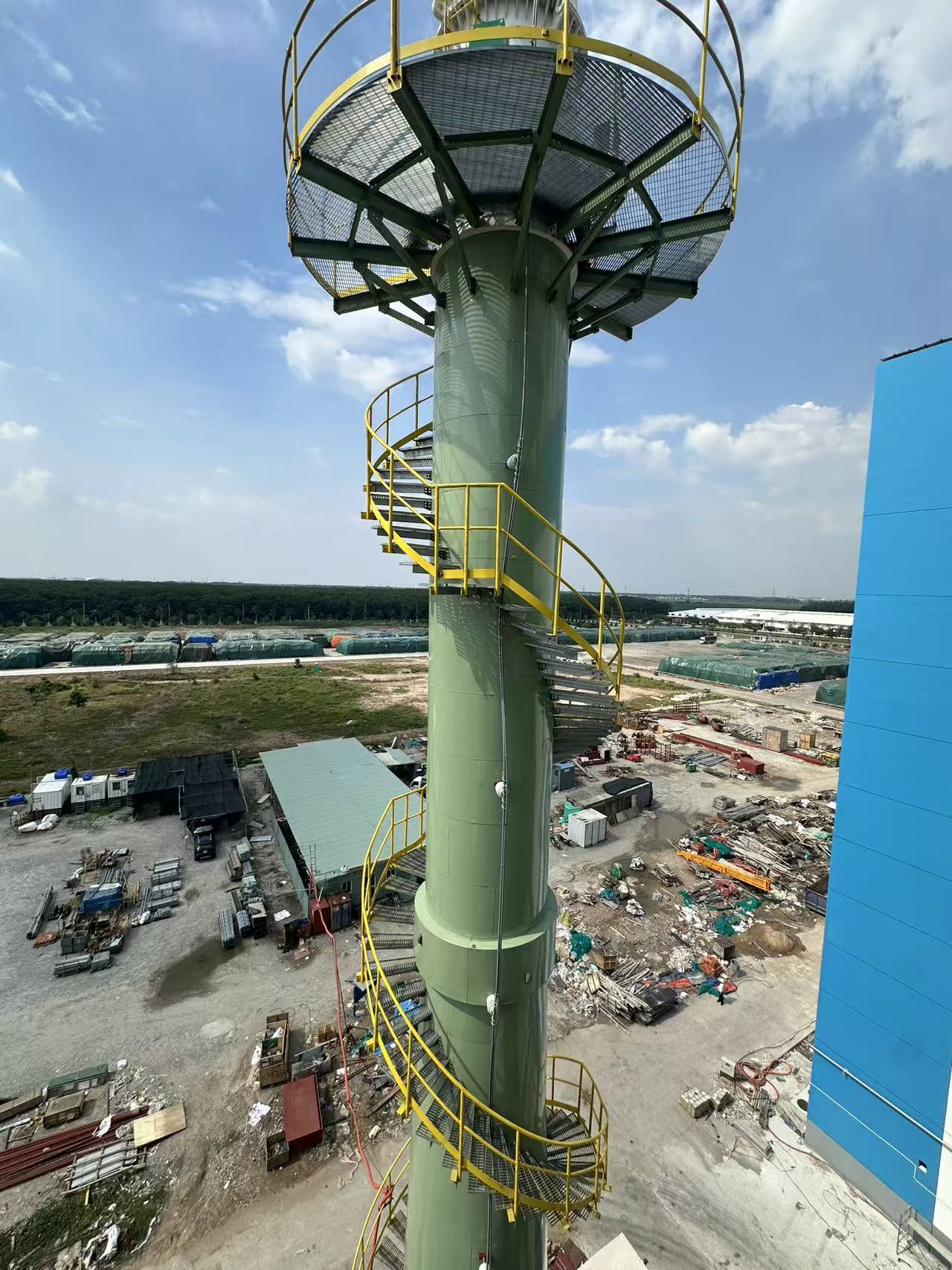
The chimney operates downstream of a paper mill waste incineration process. Although the flue gas passes through a purification system before discharge, the gas-contacting surface still required a material suitable for the specified operating environment. The design also had to account for the tapered chimney profile, the 45-meter structural height, and long-term outdoor exposure.
The project specified a basic wind pressure of 0.55 kN/m² based on a 20-year return period, Category B terrain roughness, a seismic fortification intensity of Grade 7, and a basic design ground acceleration of 0.1g. These conditions were incorporated into the structural design together with the chimney’s self-weight, maintenance platforms, ladders, and other attachments.
Detailed requirements were also established for section alignment, welding, fabrication tolerances, lifting, and site assembly. The specified delivery period was within 90 days after approval of the general arrangement drawing.
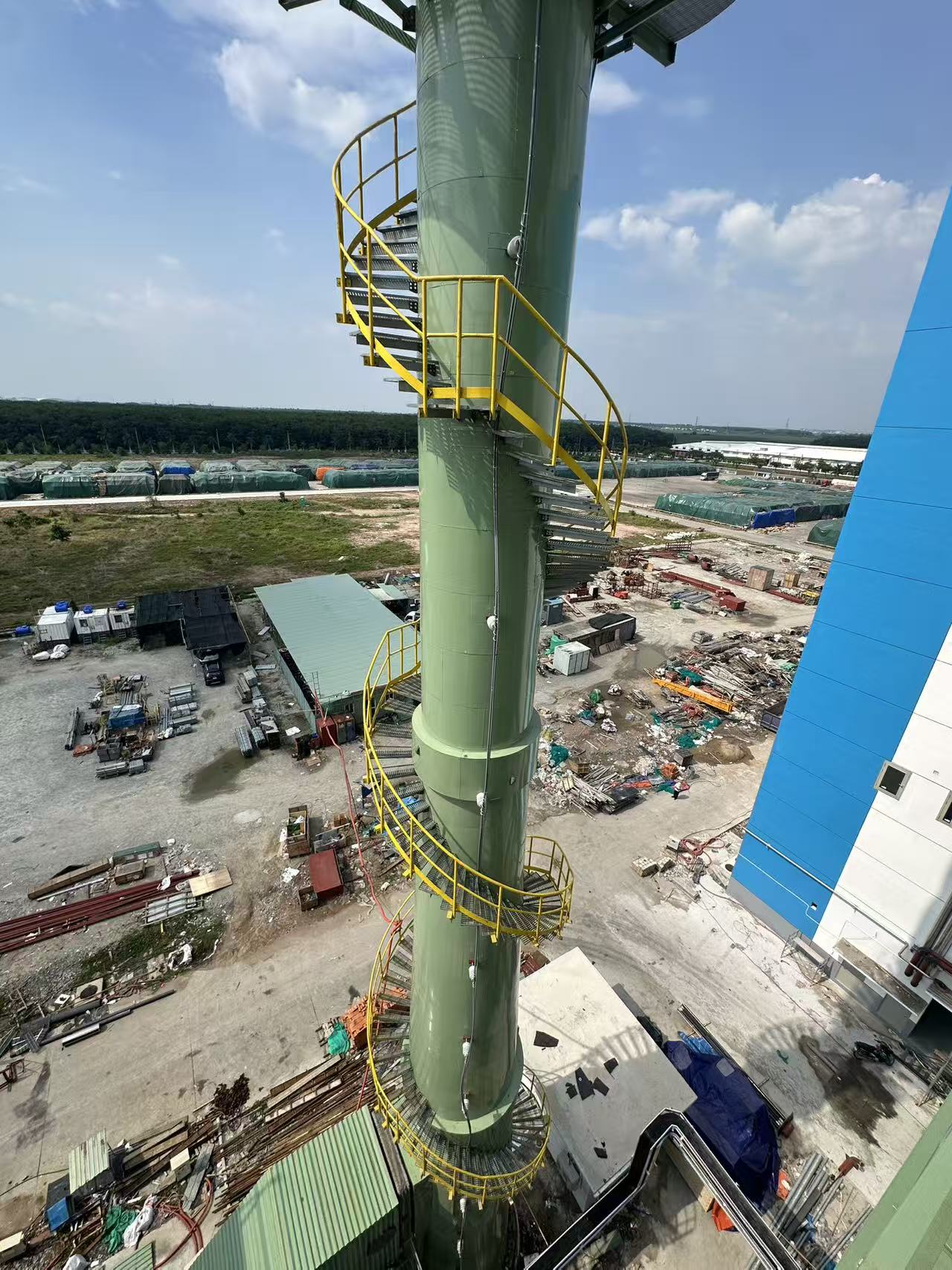
Rainbow Chimney developed a tapered, single-flue industrial steel chimney using stainless steel–clad structural plates. According to the detailed material schedule, the first chimney section uses Q355B combined with SUS316L, while the second and upper sections use Q235B combined with SUS316L.
The load-bearing carbon or low-alloy steel layer ranges from 8 to 14 mm in thickness, depending on the structural position. A 3 mm SUS316L layer forms the gas-contacting surface. This arrangement separates the structural and corrosion-control functions: the external steel layer carries the primary structural loads, while the stainless steel layer protects the surface exposed to the treated flue gas.
Platforms, ladders, stiffening ribs, and components not directly exposed to the gas were specified in Q235B steel. Manufacturing controls covered raw-material inspection, automatic cutting and edge preparation, plate rolling, weld finishing, dimensional tolerances, and protected welding conditions. These measures were intended to maintain the geometry and connection quality of the transport sections before site assembly.
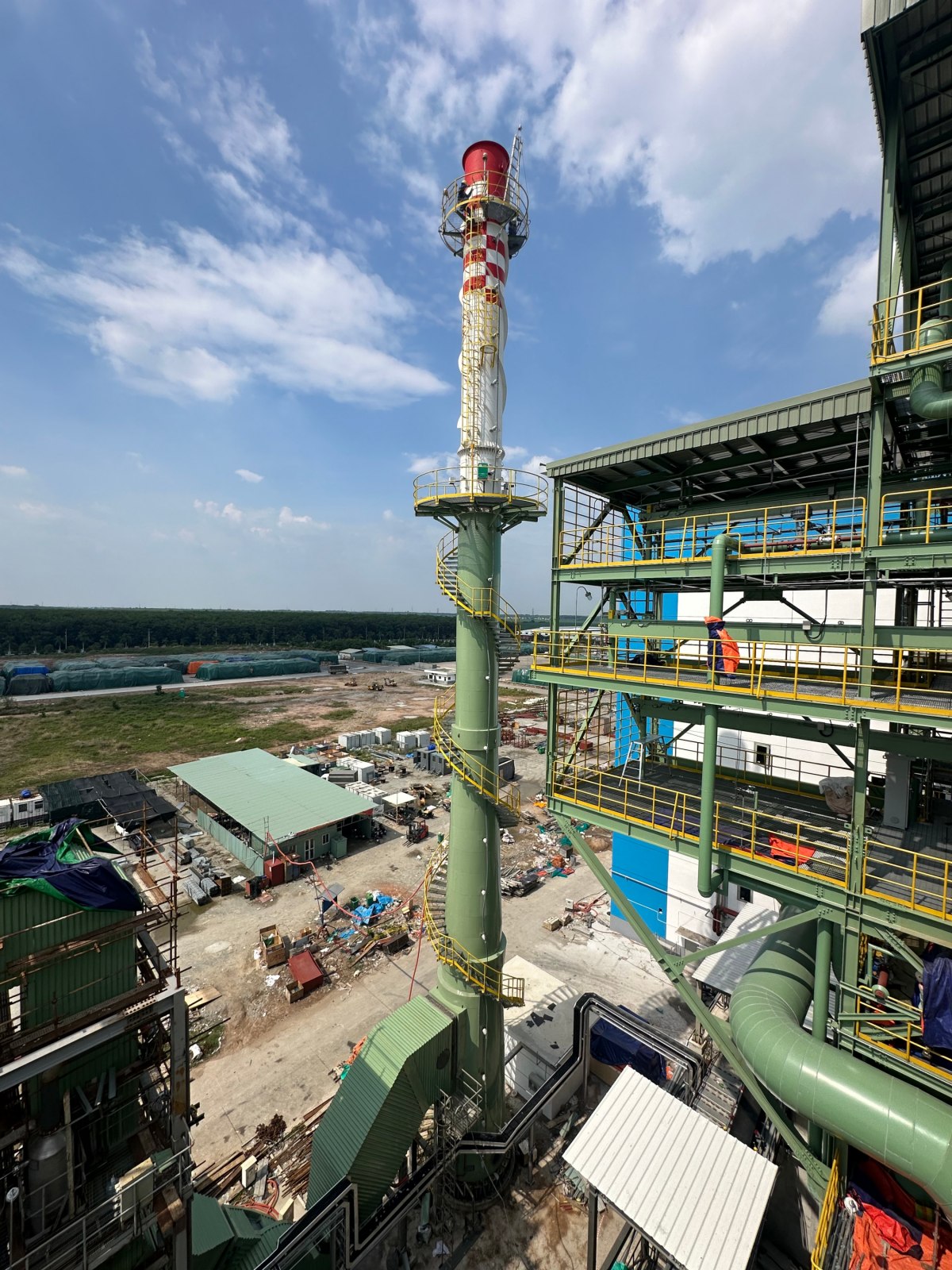
Steel surfaces were specified for abrasive blasting to Sa 2½ before coating. The external coating system consists of two coats of zinc-rich epoxy primer, one coat of epoxy micaceous iron oxide intermediate paint, and two coats of aliphatic polyurethane topcoat. The total dry film thickness is not less than 220 μm.
The ladders and platforms use a comparable coating system. The upper one-third of the chimney is finished with alternating traffic-red and traffic-white aviation marking bands to improve visibility. Packaging requirements include waterproofing, moisture protection, vibration reduction, and impact protection during handling and transportation.
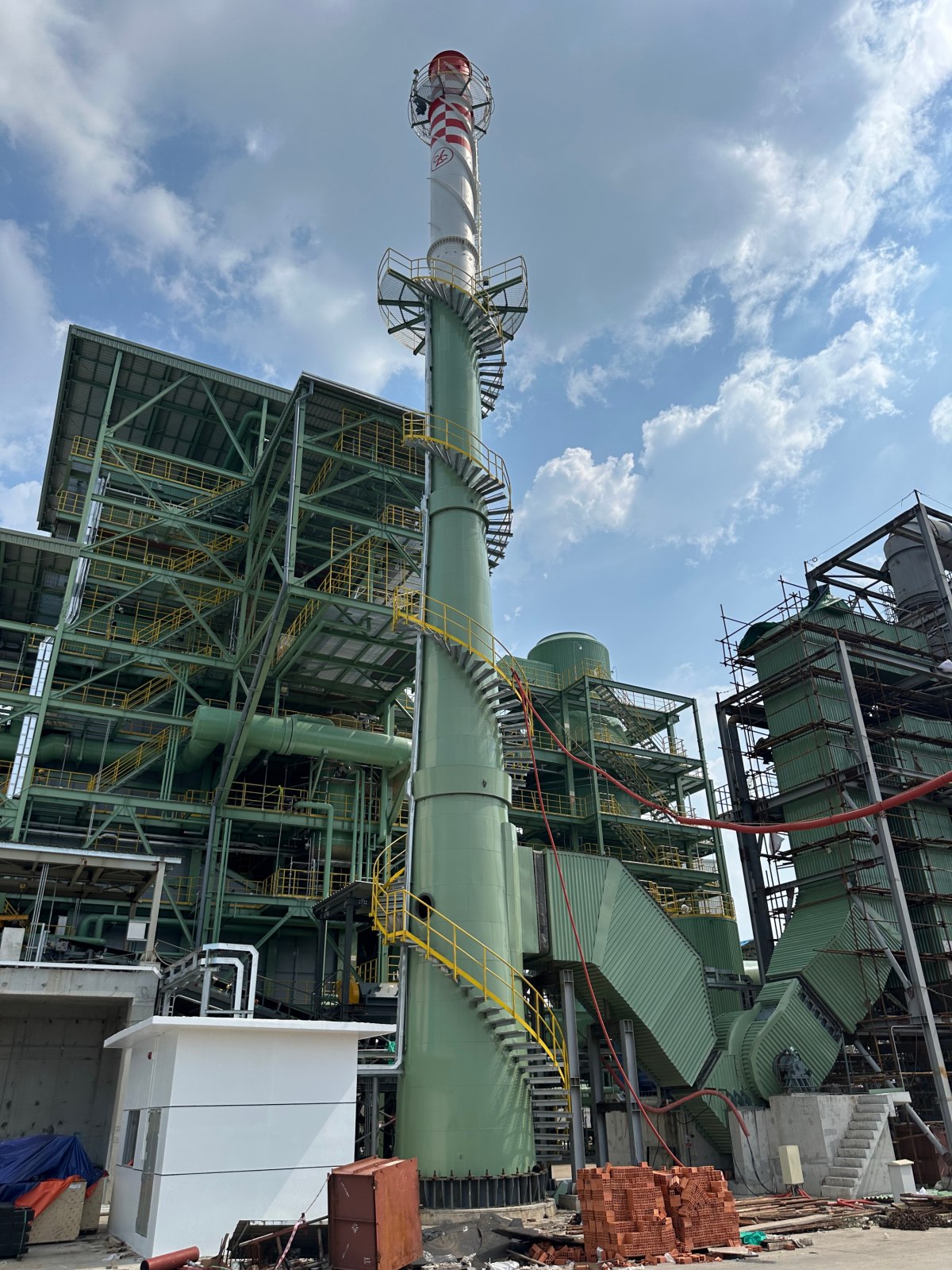
Rainbow Chimney's supply scope included the complete steel chimney, platforms, ladders, engineering documentation, manufacturing, testing, packaging, and transportation to Shanghai Port. The scope also covered planning and process-control documents, quality management, technical consultation, and necessary equipment training.
Before installation, Rainbow provides technical clarification on the chimney structure and assembly requirements. Installation and commissioning are supported through remote video guidance. Project documentation also defines alignment checks, field-welding requirements, and long-term settlement and inclination monitoring procedures.
This Vietnam paper mill project reflects Rainbow Chimney's ability to coordinate industrial chimney design, material selection, fabrication control, corrosion protection, and overseas delivery around specific operating and structural conditions.