What are you looking for?

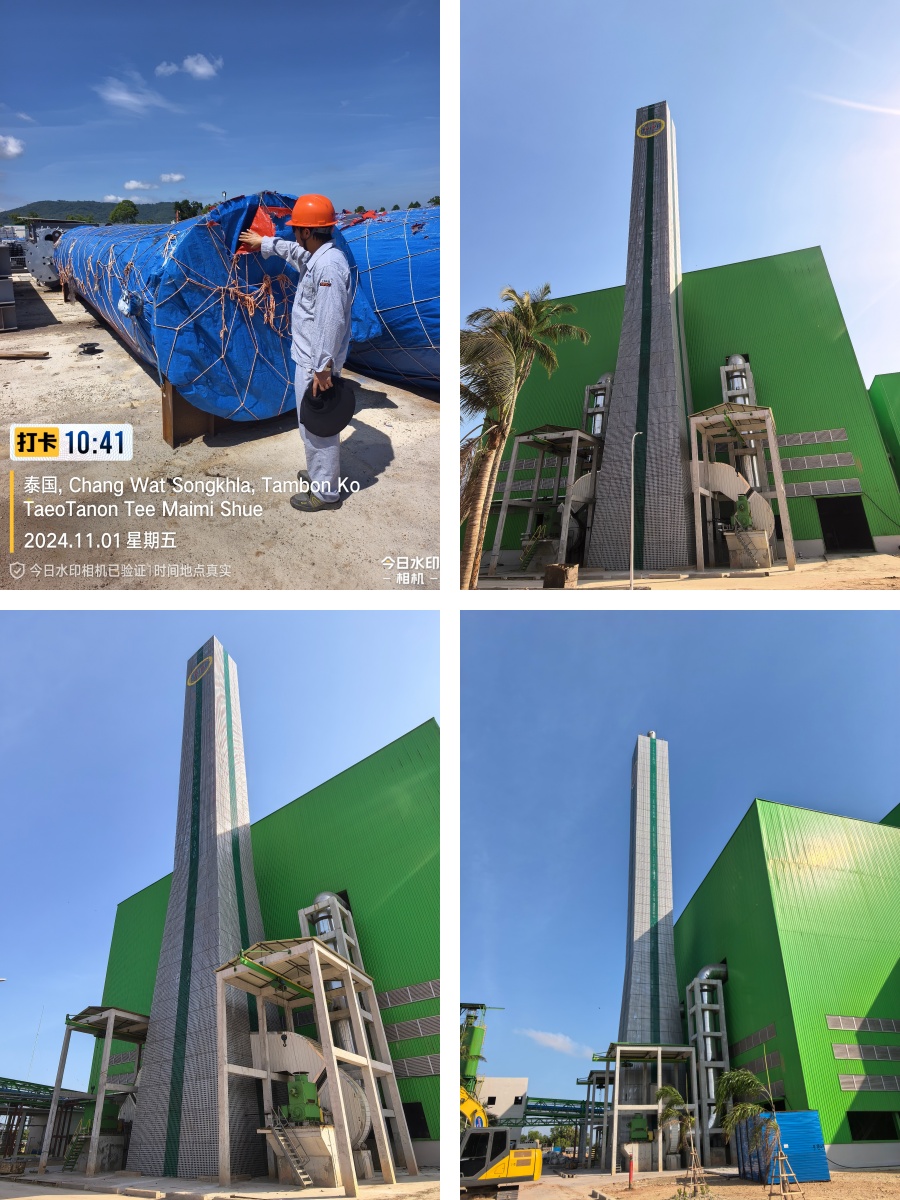
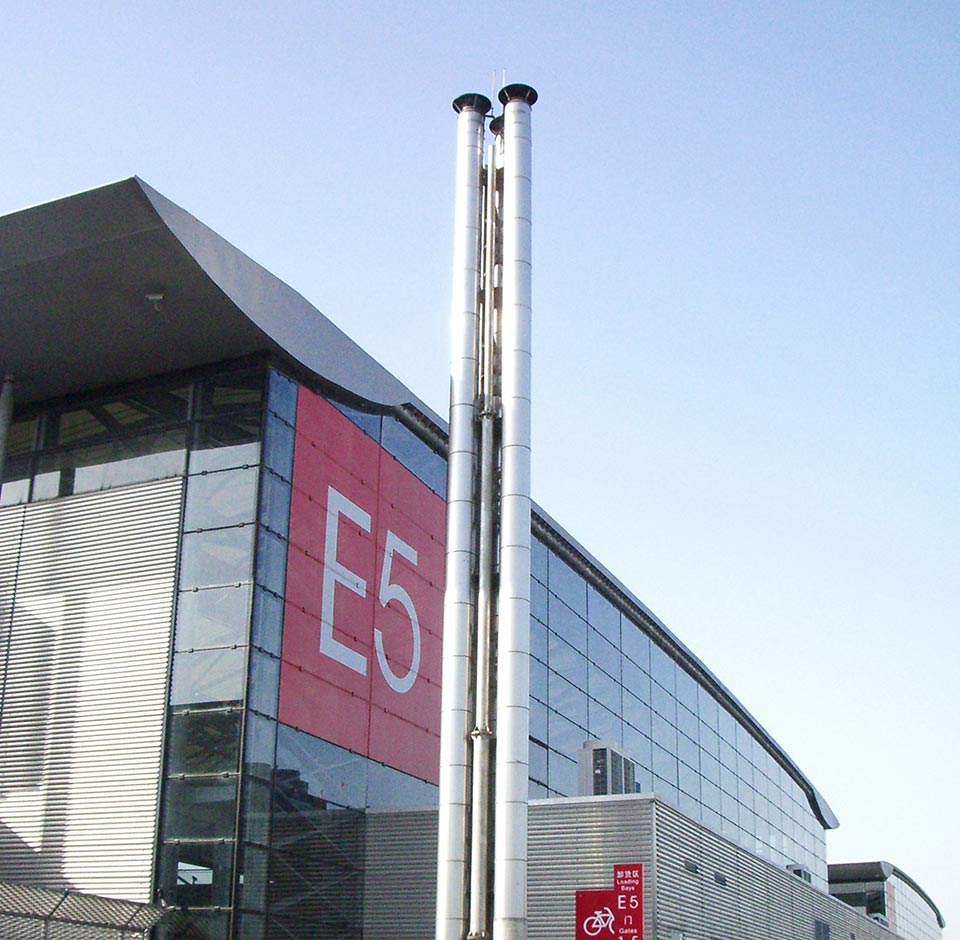
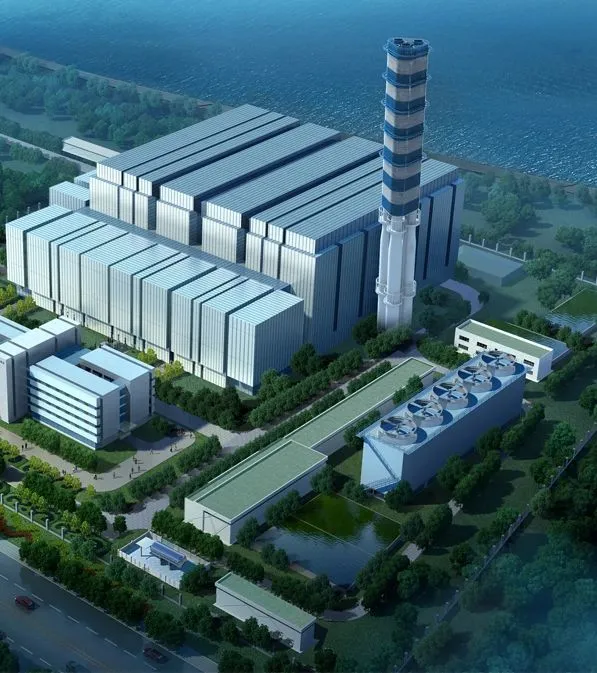
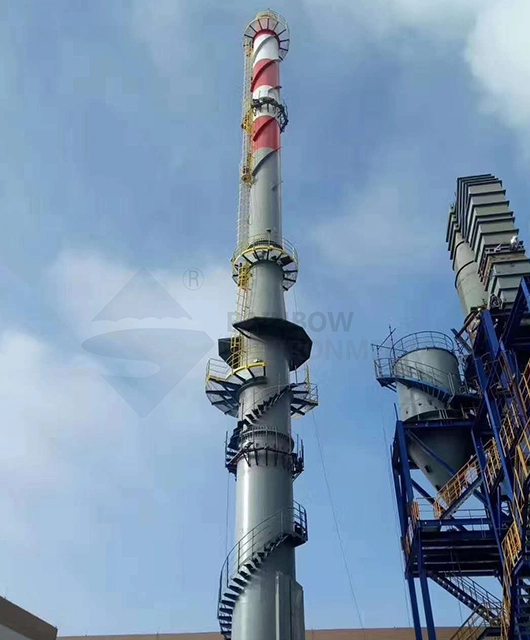
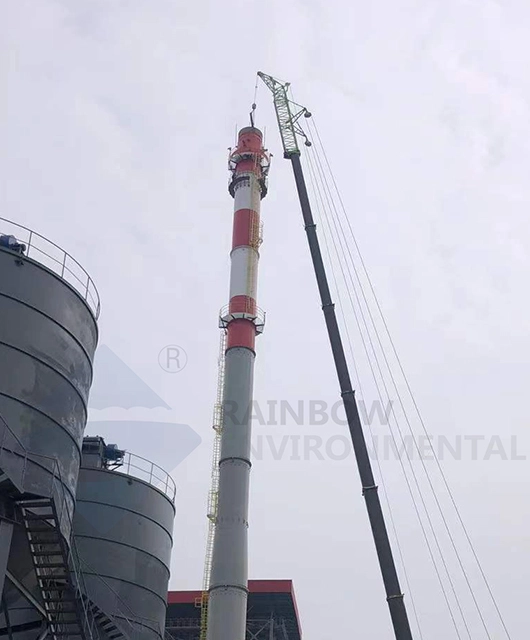
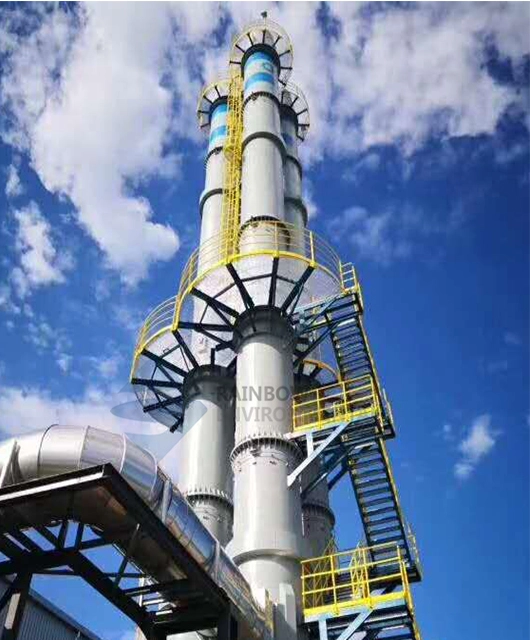
For the TPIPP 1 × 12 MW waste-to-energy project in Songkhla Province, Rainbow supplied a 70 m tower-supported steel chimney serving two waste-incineration lines. The chimney design combines two independent insulated S30408 flues within a shared Q355B steel tower. Rainbow’s scope included detailed design, manufacturing, supply, installation guidance, commissioning assistance and acceptance support.
Project Parameter | Specification |
Project | TPIPP Songkhla 1 × 12 MW Waste-to-Energy Project |
Location | Songkhla Province, Thailand |
Application | Waste-incineration flue gas discharge |
Chimney configuration | One supporting tower with two independent flues |
Chimney height | 70 m |
Flue outlet diameter | 1,500 mm each |
Flue construction | 3 mm S30408 + 50 mm insulation + 0.8 mm S30408 |
Supporting tower | Q355B structural steel |
Flue gas inlet temperature | 160°C nominal; 170°C maximum |
Chimney design temperature | 180°C |
Design service life | 25 years |
Each incineration line required an independent exhaust path. The two chimney flues therefore had to remain physically separate while sharing the supporting tower, inspection platforms, access ladders and architectural enclosure.
At full load, the specified flue gas flow was 83,360 Nm³/h under nominal conditions and up to 92,000 Nm³/h at maximum flow. The operating range was 70%–110%, with the flue gas inlet located at an elevation of 8.2 m.
The treated exhaust contained particulate matter, HCl, SO₂, HF, NOx, mercury and other heavy metals. Material selection therefore had to distinguish between the gas-contacting flues and the load-bearing tower structure.
Structural calculations also considered a basic wind pressure of 0.45 kN/m², Grade 6 seismic fortification and a design ground acceleration of 0.05g. Transportation sections, lifting stability, high-altitude welding and installation tolerances had to be coordinated during the engineering stage.
Rainbow arranged two independent flues within a shared tower-type steel chimney. This configuration retained a separate exhaust path for each incineration line while allowing both systems to share the supporting structure and maintenance facilities.
Each flue consists of a 3 mm S30408 stainless steel inner layer, 50 mm of thermal insulation and a 0.8 mm S30408 outer layer. The stainless steel inner surface provides the specified gas-contacting material, while the insulation limits heat transfer to the surrounding tower and access areas.
The tower’s main load-bearing members and connection nodes use Q355B steel. Platforms, ladders, handrails, flue stiffeners and other components not directly exposed to flue gas use Q235B steel. Hot-dip galvanizing was specified for the tower and its accessories, while the chimney interior received the required corrosion-protection treatment.
Inspection platforms and climbing access were integrated into the waste-incineration chimney system to support routine inspection and maintenance. Architectural cladding was installed around the tower without obstructing its structural, exhaust or access functions.
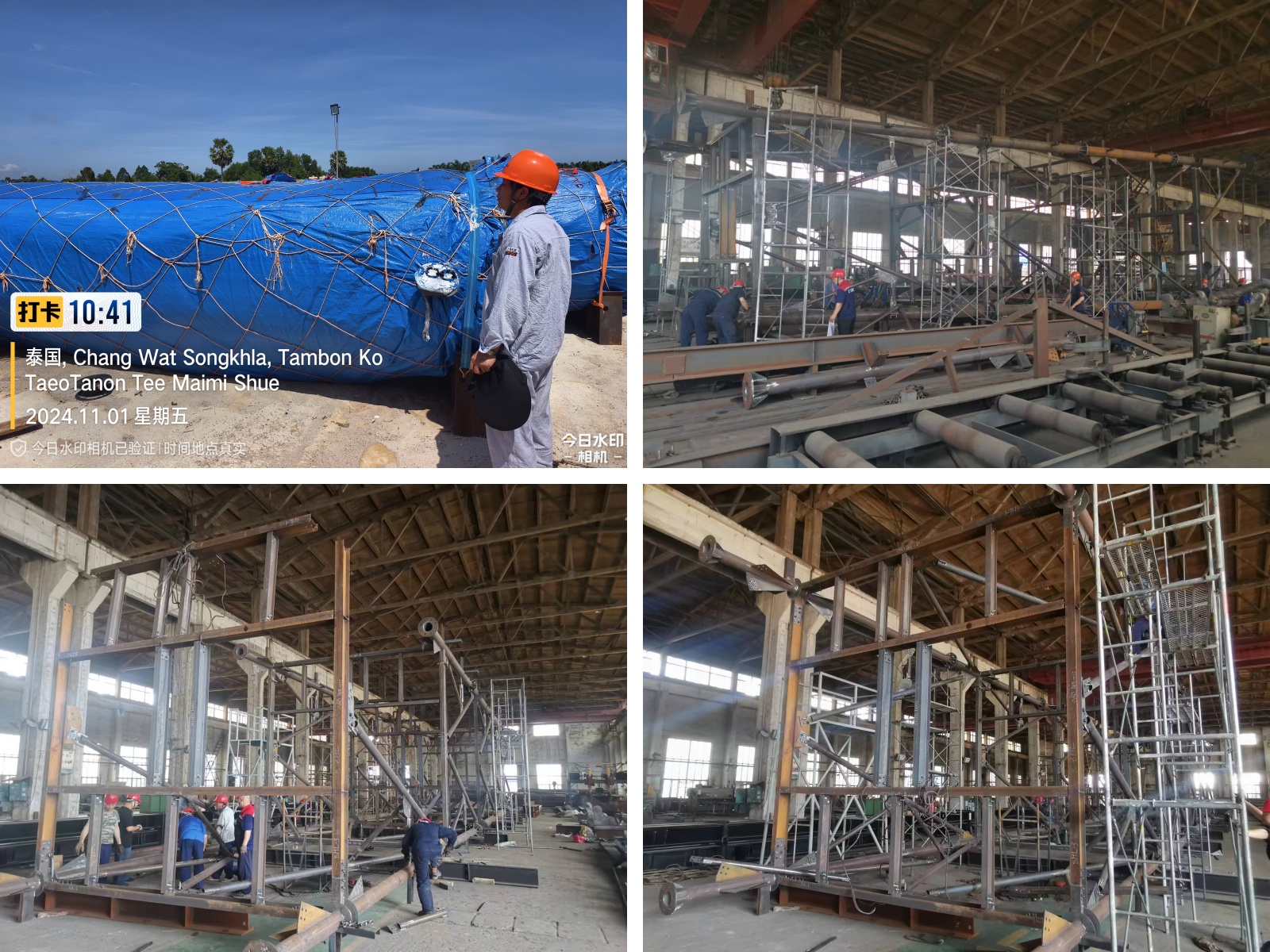
Manufacturing controls covered material inspection, plate rolling, welding and dimensional checks. Particular attention was given to flue ovality, weld alignment, flange geometry and transport-section accuracy to support site assembly of the 70 m structure.
Rainbow supplied the chimney body, supporting tower and auxiliary facilities, together with packaging and delivery to Shanghai Port. The project scope also included erection clarification, video-based installation guidance, commissioning assistance and acceptance support.
This project demonstrates Rainbow’s capabilities as a chimney manufacturer for overseas EPC projects involving multi-flue engineering, stainless steel fabrication, structural tower manufacturing and coordinated site installation.