What are you looking for?
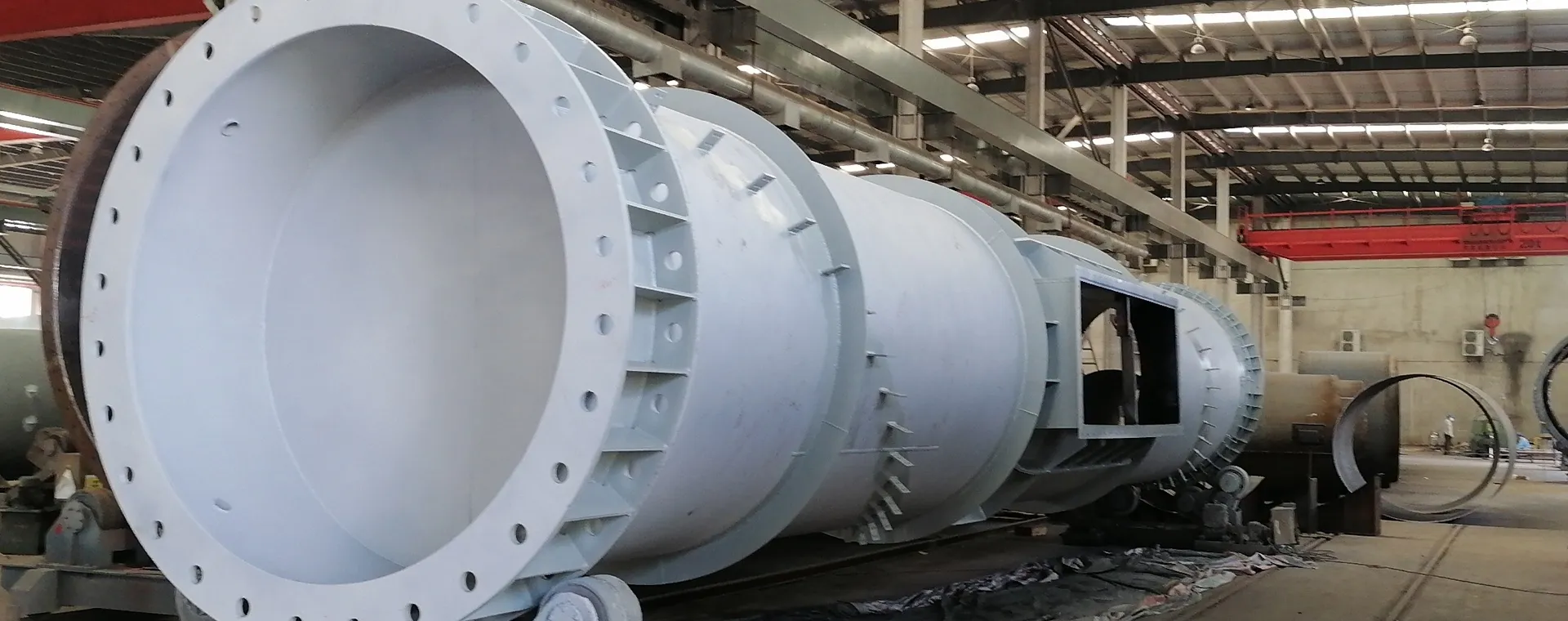
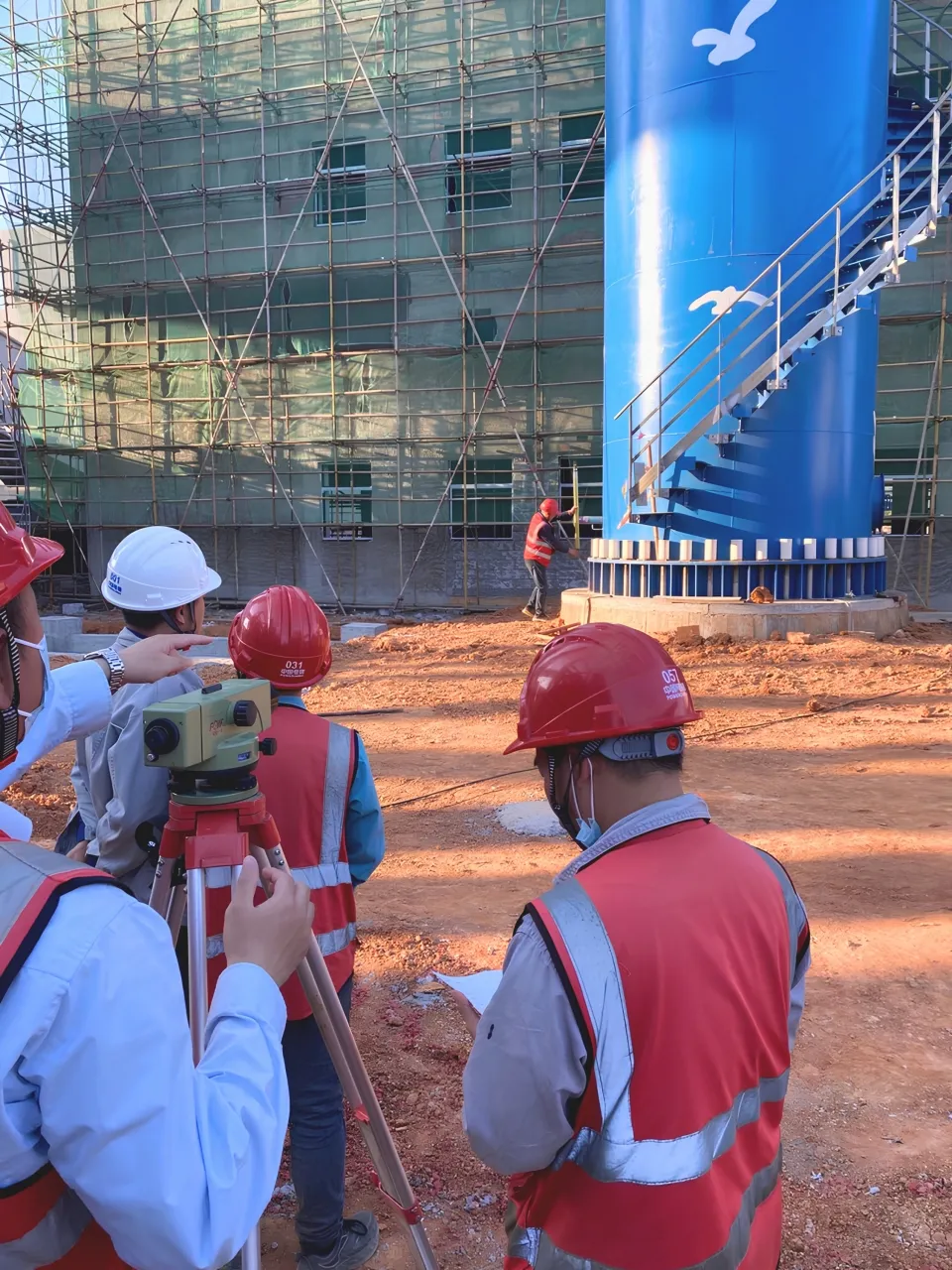
The biomass boiler chimney design should consider the variabilities of fuel moisture, ash chemistry, boiler load, and performance of pollution control since these operational parameters influence particulate carryover, deposit formation, corrosion, draft, and maintenance access. Therefore, a reliable design for biomass chimneys must consider the entire fuel and flue-gas envelope, not just the nominal temperature and flow data.
Rainbow evaluates gas flow, temperature, moisture, pressure, particulate loading and operating cycles — it converts biomass fuel and boiler data into traceable chimney sizing and material-selection inputs
Wood chips, pellets, bark and agricultural residues — each of these comes with different moisture, ash and flue-gas conditions. Seasonal fuels, load changes and upset operation must be accommodated by the sizing and materials of the chimneys
Fine ash can still be left downstream of the dust-control equipment and build up at inlets, joints, or other low-velocity areas, which then results in increased resistance of the system and additional inspection and cleaning requirements.
Chlorides, alkalis, moisture, and ash at the surface can become corrosive when the surface cools under low load or during shutdown. The temperature of the bulk flue gas by itself cannot define the required protection.
Chimney height, diameter, and inlet geometry affect gas velocity, system resistance, and ID-fan operation. Sizing should be coordinated with the boiler and complete emissions-control system.
Plants with several boilers need coordinated flue isolation, thermal movement, and duct loads. Restricted plots and lifting access also influence selection of the structure, fabrication modules, and erection planning.
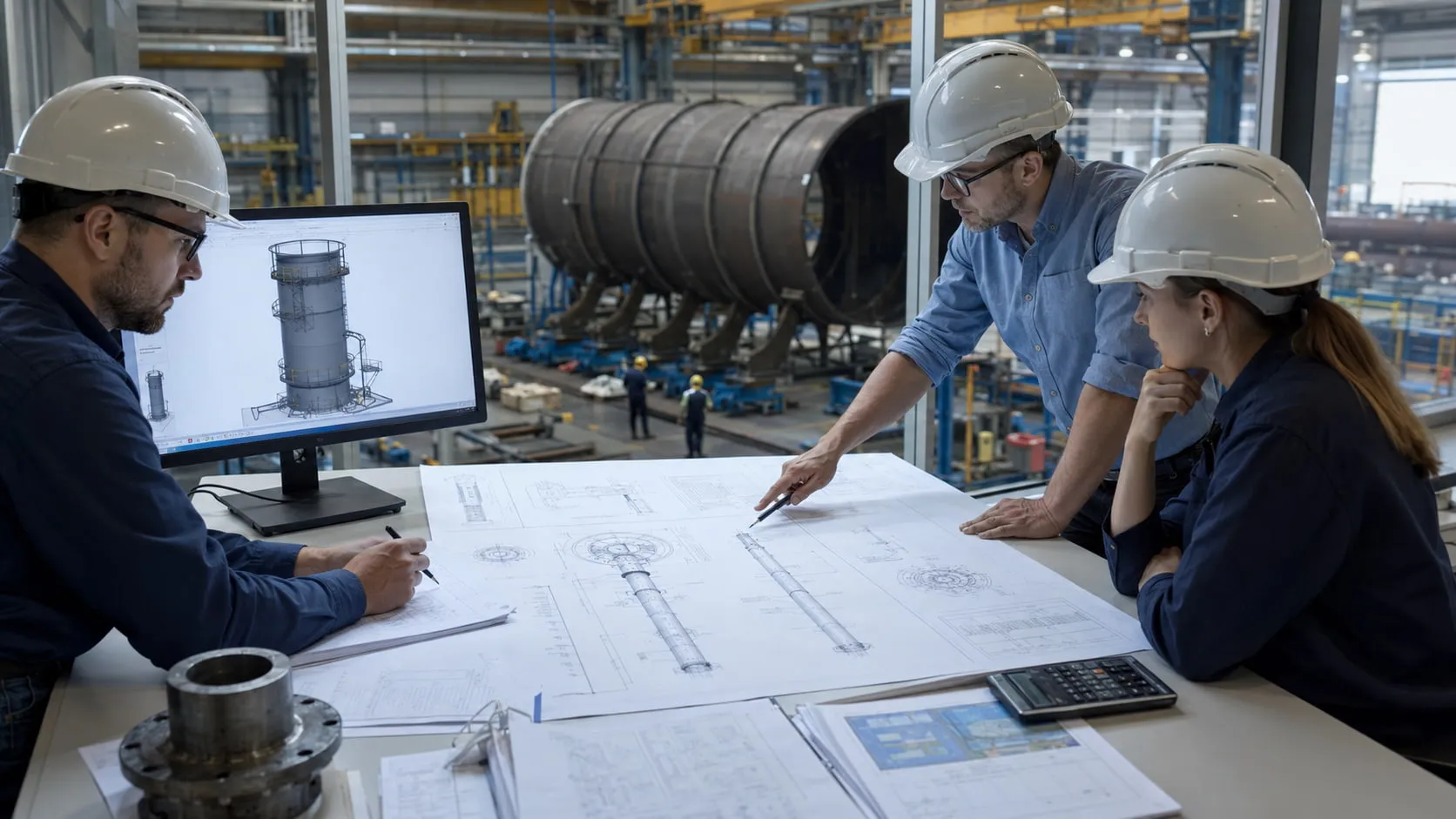
Rainbow designs each biomass plant chimney after checking fuel properties, boiler operating data, and pollution-control outlet conditions. The engineering check involves gas flow, draft, corrosion protection, structural loads, maintenance access, and EPC interfaces. Self-supporting, tower-supported, and multi-flue configurations are compared to finalize the chimney arrangement and material strategy.

Rainbow assesses gas flow, temperature, moisture, pressure, particulate loading and operating cycles, converting biomass fuel and boiler data into traceable chimney sizing and material-selection inputs.

Chimney diameter, inlet transitions and inner surfaces are harmonized to uphold proper gas velocity, minimize areas where ash can be trapped and offer easy access for inspection, sampling and deposit removal.

The shell and gas-contact liner are considered independently. Selections of materials, insulation, joints, and drainage are based on temperature, moisture, deposit chemistry, cleaning methods, and operating cycles.

This sets up the rainbow to coordinate with the boiler and ID fan in terms of chimney resistance and then compares single-flue, multi-flue, and cluster arrangements based on operating schedules, isolation requirements, and available plant space.

The fabrication sections, foundations, platforms, and field connections are planned in such a way as to minimize interface uncertainty during lifting and site assembly. This includes the transportation limits, crane access, and EPC schedule.
The Fuel types, boiler capacity, gas composition, flow, pressure, normal and upset temperatures, moisture, particulate loading, pollution control equipment, outlet height requirements, site wind and seismic conditions, duct layout, operating cycles, and governing codes should be provided.
Wood chips, pellets, bark, and bagasse and the residues from agriculture may each bring their own particular levels of moisture, particulate loads, ash chemistry, and conditions in the flue gas. A fuel analysis and the whole of the operation envelope must be considered before choosing the liner, insulation, and means of cleaning for the chimney.
Stack height is subject to the approval of the concerned authorities based on the environmental clearance and dispersion study, the height of the adjacent structures, characteristics of the terrain, exit parameters, and the regulations in force. Then check the structural possibility against the wind, seismic, foundation, and aviation requirements of the project.
No, not always. It depends on the gas and deposit chemistry, surface-temperature profile, moisture, startup and shutdown exposure, cleaning method, and design life. The structural shell and gas-contact liner must be evaluated distinctly.
The design should, as much as possible, reduce the number of unwanted ledges and sharp internal transitions. Cleanout points, inspection doors, drains, and access should be designed based on expected particulate carryover, gas velocity, deposit behavior, and the maintenance procedure of the plant.
One supporting structure may be shared by several boilers. However, a check should be carried out on gas compatibility, the possibility of simultaneous operation, pressure interaction, and isolation requirements. Where the availability of the boilers and their maintenance separation is significant, independent flues may be preferable.
Self-supporting chimneys are suitable for many compact installations. Systems supported by a tower may be more appropriate for greater heights or when there are multiple flues to be accommodated, while cluster structures group several exhaust paths within a limited footprint. The final choice will be based on the layout and structural loads.
Engineering, shell, and liner sections; insulation; access systems; sampling ports; drains; aviation accessories; anchor components; fabrication documentation; packing and installation support. Responsibility boundaries should be agreed before manufacture.
Explore Rainbow's completed biomass plant chimney projects for biomass power plants and renewable energy facilities. Each project showcases our expertise in chimney engineering, corrosion-resistant materials, and customized steel chimney solutions designed for safe, efficient, and reliable long-term operation.
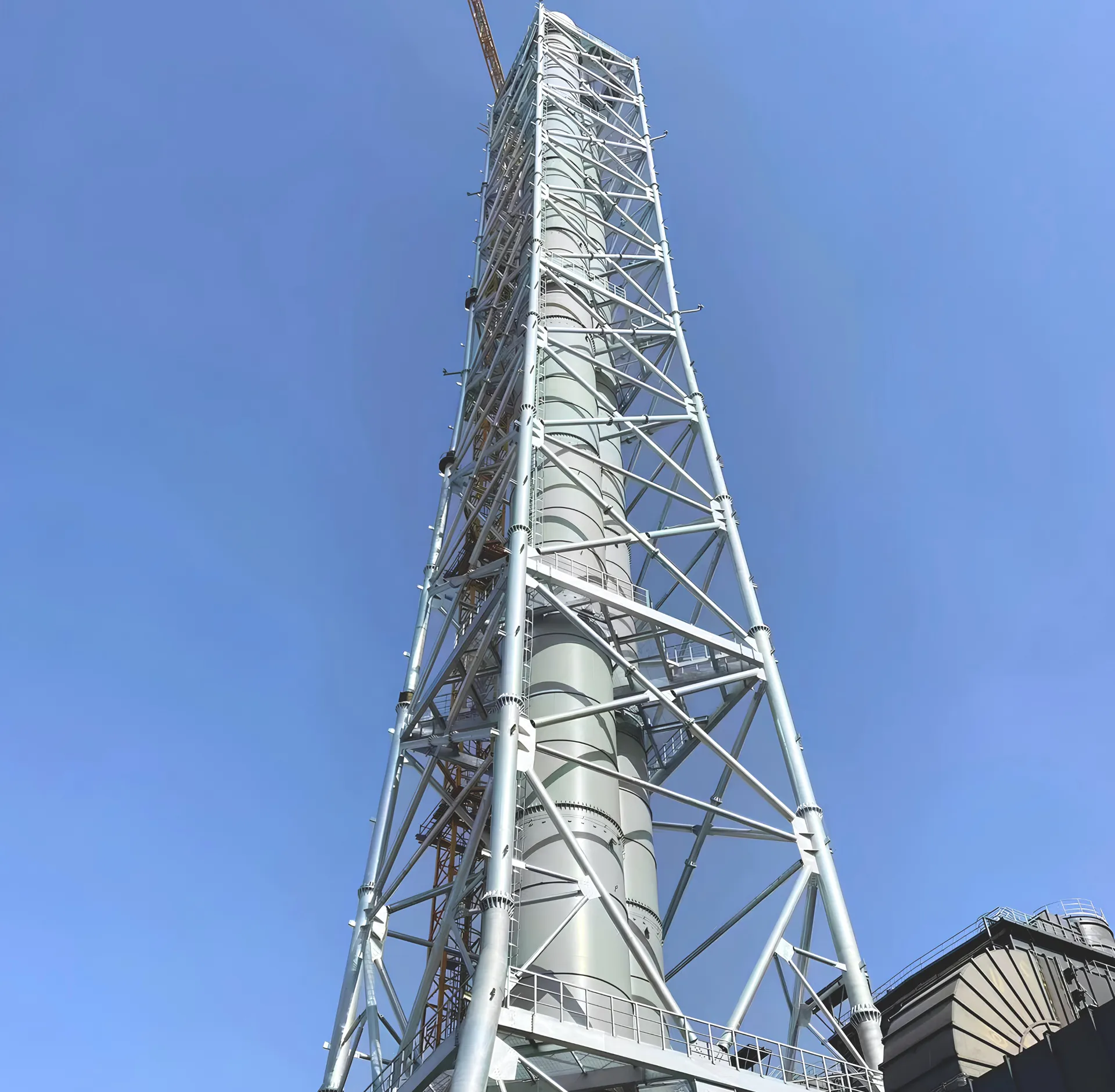
Country: Indonesia
Height: 60 m
Configuration: Tower-type steel chimney
Material: S304 outer and inner cylinders
Core Requirement: Control particulate deposits and moisture-related corrosion in a compact single-flue arrangement.
Rainbow Solution: Stainless gas path with project-specific inspection, cleanout and condensate-management provisions.
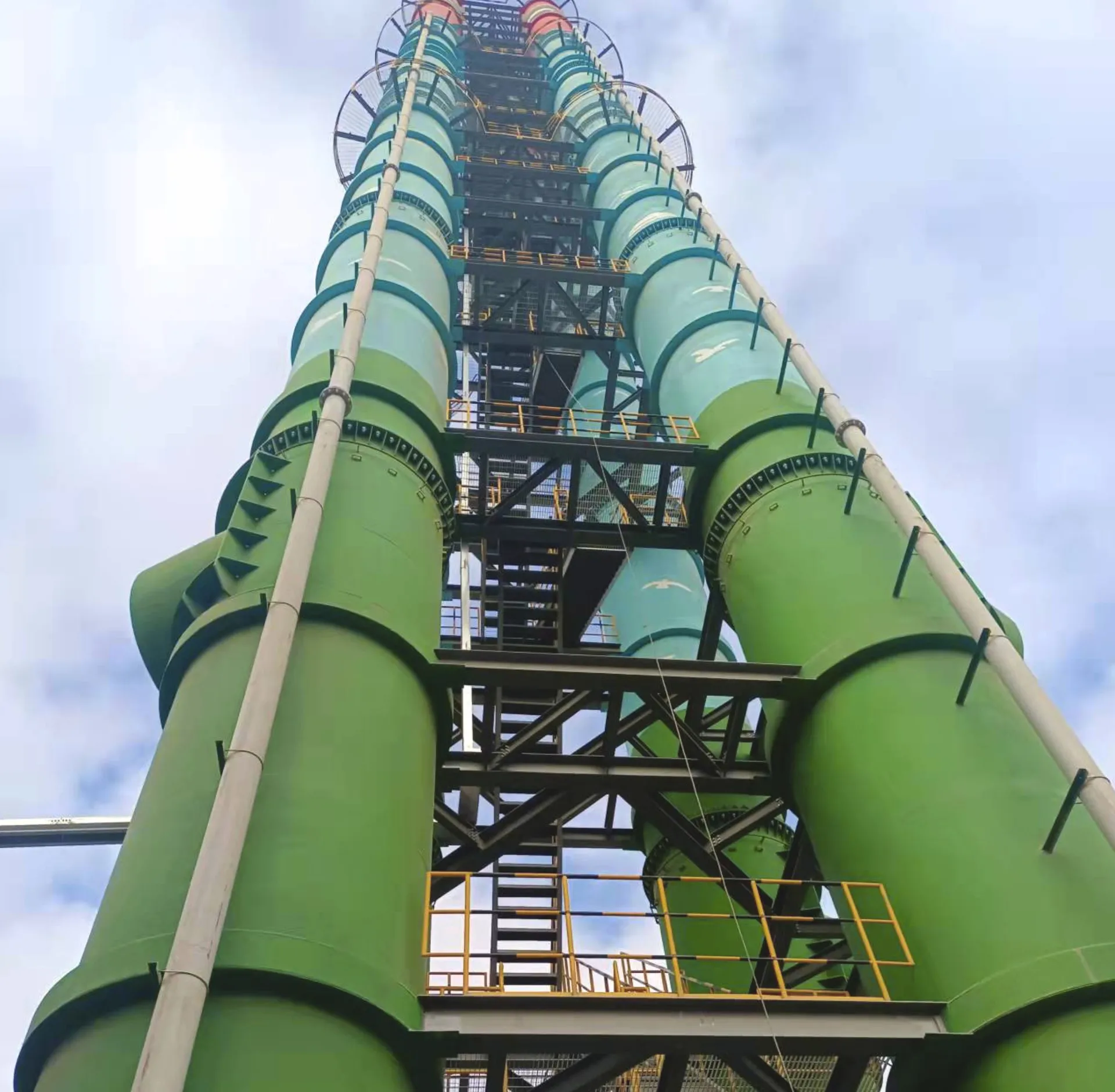
Country: Brazil
Height: 4 × 80 m
Configuration: Cluster and tower-type steel chimney
Inner-Flue Materials: Acid-resistant steel and S316L
Core Requirement: Maintain four independent gas paths within a consolidated plant footprint.
Rainbow Solution: Separate lined flues within one tower for operational isolation and coordinated maintenance.
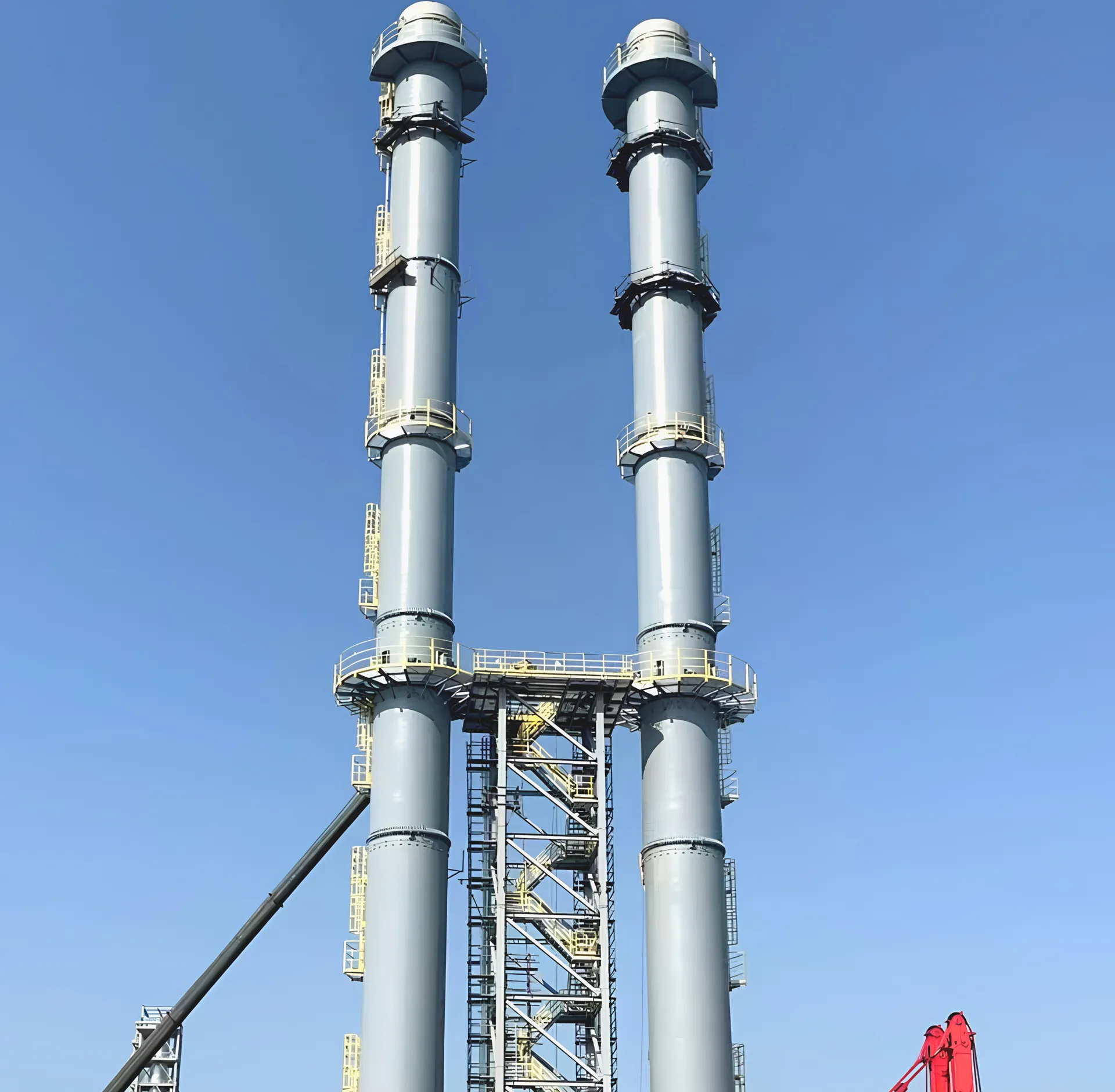
Country: Thailand
Height: 3 × 45 m
Configuration: Sleeve self-supporting steel chimneys
Materials: Q355B outer cylinders and S30408 inner cylinders
Core Requirement: Coordinate three boiler exhaust lines with independent operation and restricted plant space.
Rainbow Solution: Separate self-supporting units with coordinated duct, expansion and maintenance interfaces.
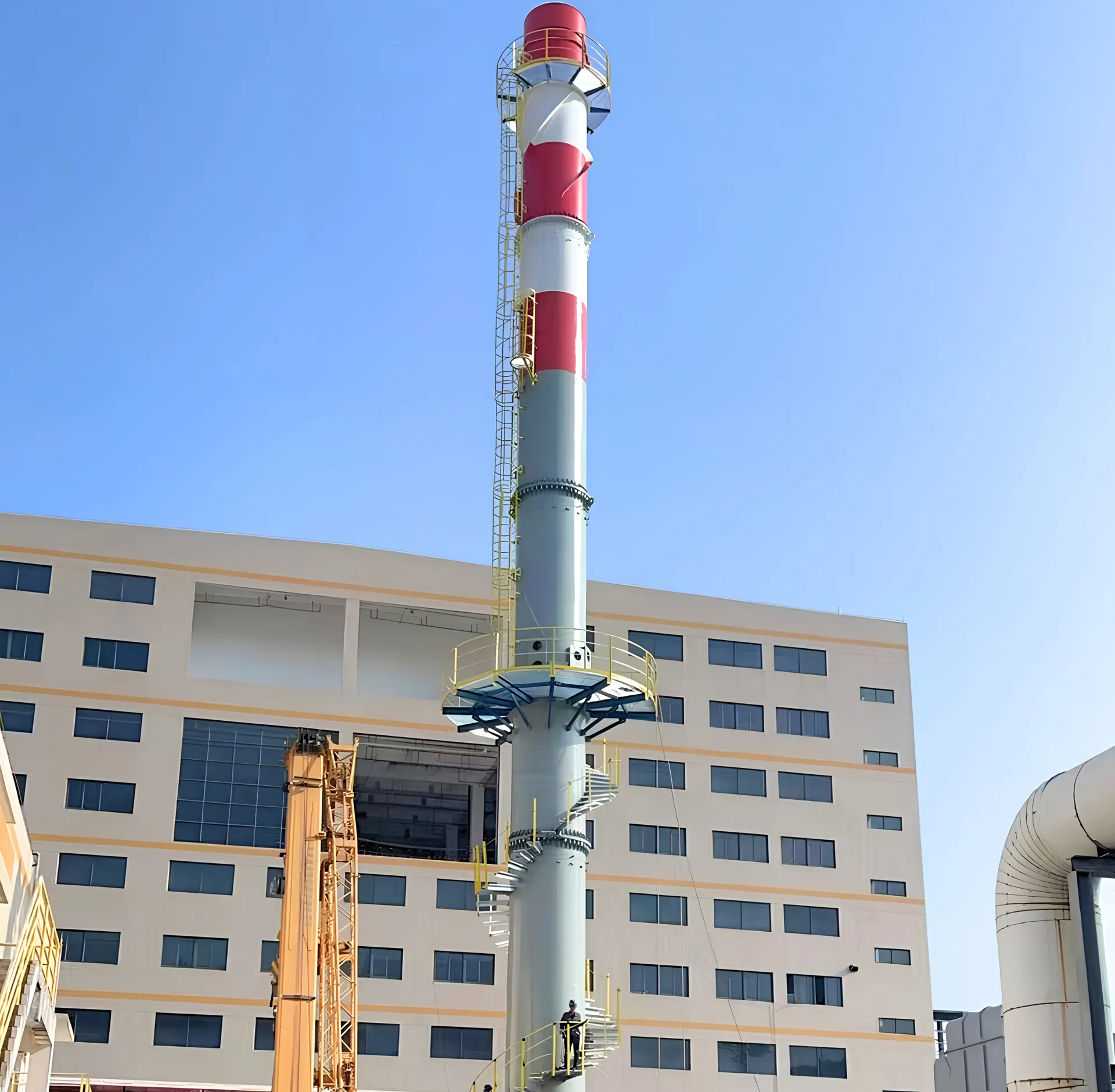
Country: U.K.
Height: 50 m
Configuration: Sleeve self-supporting steel chimney
Materials: Q355E outer cylinder and fiberglass inner cylinder
Core Requirement: Manage moisture-sensitive exhaust and potential low-temperature corrosion.
Rainbow Solution: Insulated fiberglass gas path with sealed joints, drainage and inspection access.
Country: Indonesia
Height: 60 m
Configuration: Tower-type steel chimney
Material: S304 outer and inner cylinders
Core Requirement: Control particulate deposits and moisture-related corrosion in a compact single-flue arrangement.
Rainbow Solution: Stainless gas path with project-specific inspection, cleanout and condensate-management provisions.
Country: Brazil
Height: 4 × 80 m
Configuration: Cluster and tower-type steel chimney
Inner-Flue Materials: Acid-resistant steel and S316L
Core Requirement: Maintain four independent gas paths within a consolidated plant footprint.
Rainbow Solution: Separate lined flues within one tower for operational isolation and coordinated maintenance.
Country: Thailand
Height: 3 × 45 m
Configuration: Sleeve self-supporting steel chimneys
Materials: Q355B outer cylinders and S30408 inner cylinders
Core Requirement: Coordinate three boiler exhaust lines with independent operation and restricted plant space.
Rainbow Solution: Separate self-supporting units with coordinated duct, expansion and maintenance interfaces.
Country: U.K.
Height: 50 m
Configuration: Sleeve self-supporting steel chimney
Materials: Q355E outer cylinder and fiberglass inner cylinder
Core Requirement: Manage moisture-sensitive exhaust and potential low-temperature corrosion.
Rainbow Solution: Insulated fiberglass gas path with sealed joints, drainage and inspection access.