What are you looking for?

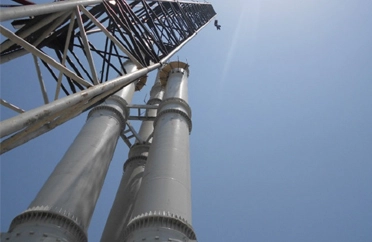
A self supporting chimney is engineered to remain upright without the need for external supports such as guy wires or bracing systems. This independence requires precise structural design to ensure stability under various conditions, including strong winds, thermal expansion, and seismic activities. Manufacturers like Rainbow place emphasis on using high-quality steel materials combined with advanced welding techniques to maintain structural safety. The design must account for both vertical loads from the chimney's weight and lateral forces from environmental influences, ensuring long-term reliability in industrial settings.
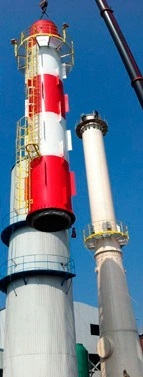
One of the greatest advantages of a self supporting chimney is its simplified installation process compared to supported alternatives. With no need for extra anchoring systems, the installation footprint is reduced, allowing for more efficient land use. Additionally, these chimneys provide aesthetic benefits, as they stand tall without visible supporting wires, which is often important in urban or industrial zones where space and visual impact must be considered. Companies like Rainbow recognize these benefits and design chimneys that combine both functionality and visual harmony, making them suitable for diverse applications.
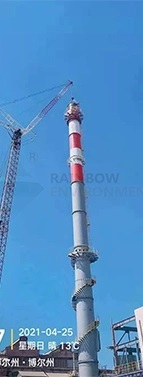
While both self supporting and supported chimneys serve the same purpose of exhaust emission, their structural differences create distinct advantages and considerations. A comparative view highlights why one might be chosen over the other in specific environments.
Aspect | Self Supporting Chimney | Supported Chimney |
Structural Independence | Stands without external support | Requires guy wires or support structures |
Land Use Efficiency | Compact footprint, minimal ground space needed | Larger area required for anchors and bracing |
Installation Complexity | Faster and simpler installation | More complex due to supporting systems |
Maintenance Requirements | Lower, as fewer external parts are exposed | Higher, with regular checks on support elements |
Visual Appearance | Sleek and unobstructed design | May appear cluttered due to visible support wires |
This comparison illustrates why many industries opt for self supporting chimneys when seeking efficiency, space-saving benefits, and reduced maintenance.
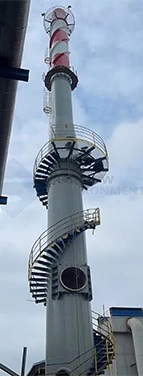
The design of any industrial chimney must take into account environmental regulations and safety requirements. A self supporting chimney is no exception, as it must handle high-temperature emissions, corrosive gases, and strict emission control standards. Incorporating advanced coatings, insulation systems, and purification technologies enhances the chimney's ability to withstand harsh conditions while minimizing environmental impact. For industrial facilities, these considerations are critical to meeting regulatory standards and maintaining safe working environments. Rainbow integrates these elements into its chimney solutions, ensuring durability and compliance in every project.
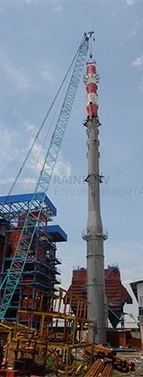
The longevity of a self supporting chimney is closely linked to innovation in design and manufacturing processes. The integration of smart monitoring systems allows operators to track emission data, structural health, and maintenance schedules in real time. This proactive approach reduces unexpected downtime while extending service life. The future of chimney technology lies in combining robust materials with digital intelligence, creating systems that not only perform well structurally but also contribute to sustainability goals. As industrial demands evolve, self supporting chimneys will continue to adapt, offering reliable and efficient solutions across various industries.

Wang Yong
Chairman
"True progress rises when industry respects the sky it touches."