What are you looking for?

Industrial chimney design refers to the engineering process of planning, analyzing, and constructing tall exhaust structures used in heavy industries such as power generation, petrochemical refining, metallurgy, and manufacturing. The purpose of industrial chimney design is to ensure safe dispersion of flue gases while maintaining structural stability under wind, seismic, thermal, and corrosion loads.
Modern industrial chimney design integrates structural engineering, fluid dynamics, environmental science, and material engineering to meet strict global compliance requirements. According to the CICIND Model Code for Concrete and Steel Chimneys, chimney structures must account for dynamic wind-induced vibrations and long-term fatigue behavior to ensure operational safety.
Internal reference: Learn more about general systems in Rainbow industrial chimney applications and types overview.
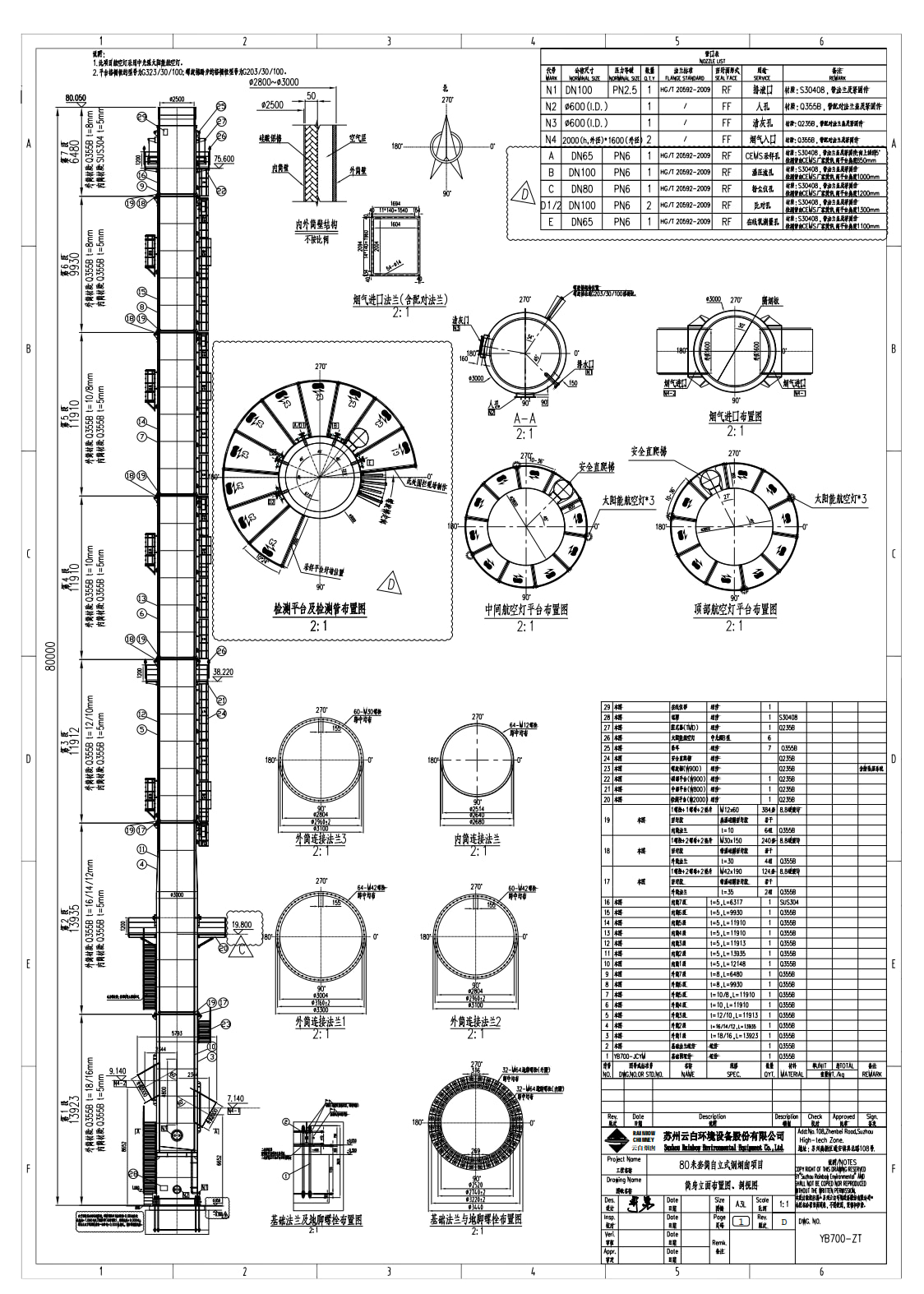
Chimney deign video credit: TECHNICA ONLINE LECTURES
The primary functions in industrial chimney design include:
Emission dispersion of flue gases
Air pollution control compliance
Thermal discharge regulation
Draft creation for combustion systems
Safety separation between emissions and working zones
From an engineering standpoint, industrial chimney design ensures optimal stack effect while maintaining structural integrity under extreme operating conditions.
Industrial chimney design is widely applied in:
Thermal power plants
Cement production facilities
Steel manufacturing plants
Chemical processing industries
Refineries and petrochemical complexes
Each application requires customized industrial chimney design based on emission type, temperature range, and environmental regulation constraints.
Steel structures are widely used in modern industrial chimney design due to their lightweight, modularity, and cost efficiency. Steel stacks are commonly governed by ASME STS-1 Steel Stacks Standard, which defines fabrication, welding, and inspection requirements.
Reinforced concrete chimneys are commonly used in large-scale industrial chimney design such as power plants. These structures provide excellent thermal resistance and long service life. According to ACI 307 Chimney Design Code, concrete stacks must consider creep, shrinkage, and thermal gradients.
Brick chimneys are traditional but still relevant in specific industrial chimney design scenarios. They offer good thermal resistance but require higher maintenance.
Fiber Reinforced Plastic (FRP) chimneys are used in corrosive environments such as chemical plants. FRP plays a niche role in corrosion-resistant industrial chimney design.
Multi-flue systems are advanced industrial chimney design solutions where multiple exhaust streams are carried in a single structural shell.
| Type | Strength | Cost | Lifespan | Application |
|---|---|---|---|---|
| Steel Chimneys | High flexibility | Medium | 20–40 years | Power plants |
| Concrete Chimneys | Very high durability | High | 50–100 years | Thermal plants |
| Brick Chimneys | Moderate | Medium | 30–60 years | Small industries |
| FRP Chimneys | Corrosion resistant | Medium-high | 15–25 years | Chemical plants |
| Multi-Flue | Efficient design | High | 40–80 years | Large complexes |
Modern industrial chimney design must comply with international engineering codes to ensure safety and performance.
The CICIND Model Code is a global benchmark for industrial chimney design, addressing wind vibration, structural fatigue, and thermal stress.
The ASME standard governs steel stack fabrication and inspection in industrial chimney design, ensuring structural reliability under operational loads.
ACI 307 provides detailed guidance for reinforced concrete industrial chimney design, focusing on thermal behavior and reinforcement detailing.
ASTM International standards regulate material properties used in industrial chimney design, especially corrosion resistance and steel grading.
Eurocode EN 13084 defines European requirements for industrial chimney design, including structural safety and load combinations.
ISO standards provide global harmonization for industrial chimney design and environmental compliance.
| Standard | Region | Focus Area | Application |
|---|---|---|---|
| CICIND | Global | Wind & dynamics | All chimneys |
| ASME STS-1 | USA | Steel stacks | Steel chimneys |
| ACI 307 | USA | Concrete stacks | RCC chimneys |
| Eurocode | EU | Structural safety | Industrial stacks |
| ISO | Global | Standardization | Multi-industry |
A critical factor in industrial chimney design affecting stability and wind response.
Determines load-bearing capacity in industrial chimney design, especially under wind and seismic forces.
Material choice defines durability and corrosion resistance in industrial chimney design.
A key part of industrial chimney design ensuring load transfer to soil safely.
Ensures resistance to buckling, vibration, and fatigue.
| Parameter | Low Value Impact | High Value Impact |
|---|---|---|
| H/D Ratio | Stability risk | Higher cost |
| Shell Thickness | Weak structure | Overdesign |
| Material Grade | Corrosion risk | High durability |
| Foundation Depth | Settlement risk | Higher cost |
Wind engineering is one of the most critical aspects of industrial chimney design.
Wind load calculations in industrial chimney design follow CICIND wind load methodology, ensuring safe dynamic response.
This phenomenon can cause oscillation in tall chimneys, a major concern in industrial chimney design.
Helical strakes and dampers are used to optimize industrial chimney design performance.
CFD tools simulate airflow and turbulence to improve industrial chimney design accuracy.
| Method | Effectiveness | Cost | Application |
|---|---|---|---|
| Helical Strakes | High | Medium | Tall stacks |
| Dampers | Medium | High | Flexible stacks |
| Shape optimization | High | High | New designs |
| CFD simulation | Very high | Medium | All designs |
Industrial chimney design must account for natural frequency and seismic resonance.
According to ASME structural seismic guidelines, seismic forces significantly influence stack stability.
Modern industrial chimney design uses performance-based engineering for seismic resilience.
High-temperature gradients significantly affect industrial chimney design.
Uneven heating leads to stress development in industrial chimney design structures.
Gas composition impacts corrosion behavior in industrial chimney design.
Thermal insulation improves efficiency and durability.
Protects structural shell in high-temperature industrial chimney design applications.
Proper height ensures pollutant dilution in industrial chimney design.
Controls dispersion efficiency and plume rise.
Industrial chimney design must meet EPA emission standards.
According to the U.S. Environmental Protection Agency guidelines, emission stacks must ensure safe pollutant dispersion thresholds.
Protect steel and concrete in industrial chimney design from acid attack.
Prevents condensation corrosion in flue gas systems.
Enhances durability of industrial chimney design structures.
Used for steel reinforcement corrosion control.
Precision fabrication is essential in industrial chimney design.
Welding must comply with ASME requirements.
Safe lifting and assembly processes are critical.
QA ensures compliance in industrial chimney design projects.
| Stage | Risk Level | Control Method |
|---|---|---|
| Fabrication | Medium | QA inspection |
| Welding | High | Non-destructive testing |
| Erection | High | Crane safety |
| Commissioning | Medium | Performance testing |
Regular inspections ensure long-term safety.
Sensors are increasingly used in industrial chimney design.
Extend lifecycle through reinforcement.
Optimizes cost efficiency and safety.
Advanced simulation enhances industrial chimney design precision.
Real-time virtual modeling improves maintenance.
IoT integration is transforming industrial chimney design.
AI improves load prediction accuracy.
Green engineering reduces emissions and material waste.
A professional partner ensures safe and efficient industrial chimney design aligned with global standards.
Advanced engineering ensures optimized industrial chimney design performance.
High-quality fabrication supports large-scale projects.
Expert teams ensure safe execution.
Ensures adherence to ASME, CICIND, and ISO standards.
Long-term maintenance improves asset value.
Explore engineering solutions at Rainbow Chimney Official Site or view specialized systems in steel chimney design solutions and advanced methodologies in steel chimney design guide.
Industrial chimney design is the engineering process of creating safe emission structures for industrial plants. It ensures proper dispersion of flue gases, structural stability under wind and seismic loads, and compliance with environmental regulations. Without proper design, plants risk safety hazards and regulatory violations.
The most widely used standards include CICIND, ASME STS-1, ACI 307, ASTM, ISO, and Eurocode. These frameworks ensure structural safety, material quality, and environmental compliance in industrial chimney design, covering everything from steel fabrication to seismic performance.
Chimney height is determined based on emission dispersion requirements, stack effect, and environmental regulations. Factors such as wind speed, pollutant concentration, and terrain are considered. Proper industrial chimney design ensures pollutants are diluted before reaching ground level.
Common materials include steel, reinforced concrete, brick, and FRP. Steel is flexible and cost-effective, concrete offers durability, and FRP provides corrosion resistance. Material selection in industrial chimney design depends on temperature, emissions, and environmental conditions.
Wind load is critical because tall chimneys are highly exposed to wind pressure and vortex shedding. Engineers use CFD analysis and CICIND guidelines to ensure industrial chimney design can withstand dynamic wind forces safely.
Seismic forces can cause vibration and structural stress. ASME and Eurocode standards guide engineers to design flexible yet stable chimneys. Proper industrial chimney design ensures resilience against earthquake-induced motion.
Depending on material and maintenance, chimneys last 20 to 100 years. Concrete chimneys generally last longer than steel structures. Proper industrial chimney design significantly extends operational life.
Corrosion protection includes coatings, linings, and cathodic protection systems. These prevent chemical degradation caused by flue gases. Effective industrial chimney design ensures long-term structural durability.
Steel chimneys are lighter and faster to construct, while concrete chimneys offer higher durability and thermal resistance. Selection in industrial chimney design depends on project scale and environmental conditions.
Future industrial chimney design trends include AI-driven optimization, digital twins, smart monitoring systems, and sustainability-focused engineering. These innovations improve safety, efficiency, and environmental performance.
Successful industrial chimney design requires a multidisciplinary approach that integrates structural engineering, aerodynamics, environmental compliance, corrosion protection, thermal analysis, and lifecycle management. By following internationally recognized chimney design standards, including CICIND, ASME STS-1, ACI 307, ASTM standards, Eurocodes, and ISO guidelines, engineers can develop safe, durable, and efficient chimney systems for modern industrial facilities.
As industries continue to adopt digital engineering tools, CFD simulation, digital twins, and AI-assisted analysis, the future of industrial stack design, chimney structural design, and industrial stack engineering will become increasingly data-driven, sustainable, and performance-focused. Organizations that invest in professional engineering expertise and lifecycle optimization will achieve greater operational reliability, regulatory compliance, and long-term asset value.

Wang Yong
Chairman
"True progress rises when industry respects the sky it touches."