What is an Industrial Chimney?
An industrial chimney is a critical component of modern industrial infrastructure designed to safely discharge exhaust gases from manufacturing processes into the atmosphere at a controlled height and velocity. In simple terms, an industrial chimney—also commonly referred to as an industrial stack—is a vertical structure that ensures pollutants, flue gases, and combustion byproducts are released in a way that minimizes environmental and human impact.
In modern engineering, an industrial chimney is not just a simple pipe. It is a highly engineered Industrial Chimney System that integrates thermodynamics, structural engineering, corrosion protection, and environmental compliance. The role of an industrial chimney is especially important in power plants, steel factories, chemical plants, and boiler systems where large volumes of gases are produced continuously.
From a technical perspective, an industrial chimney forms part of broader flues and chimneys infrastructure, connecting boilers, furnaces, and industrial equipment to atmospheric discharge points. Today, advanced industrial chimney manufacturers design customized chimney systems and chimney solutions to meet strict environmental standards and operational requirements.
How Does an Industrial Chimney Work?
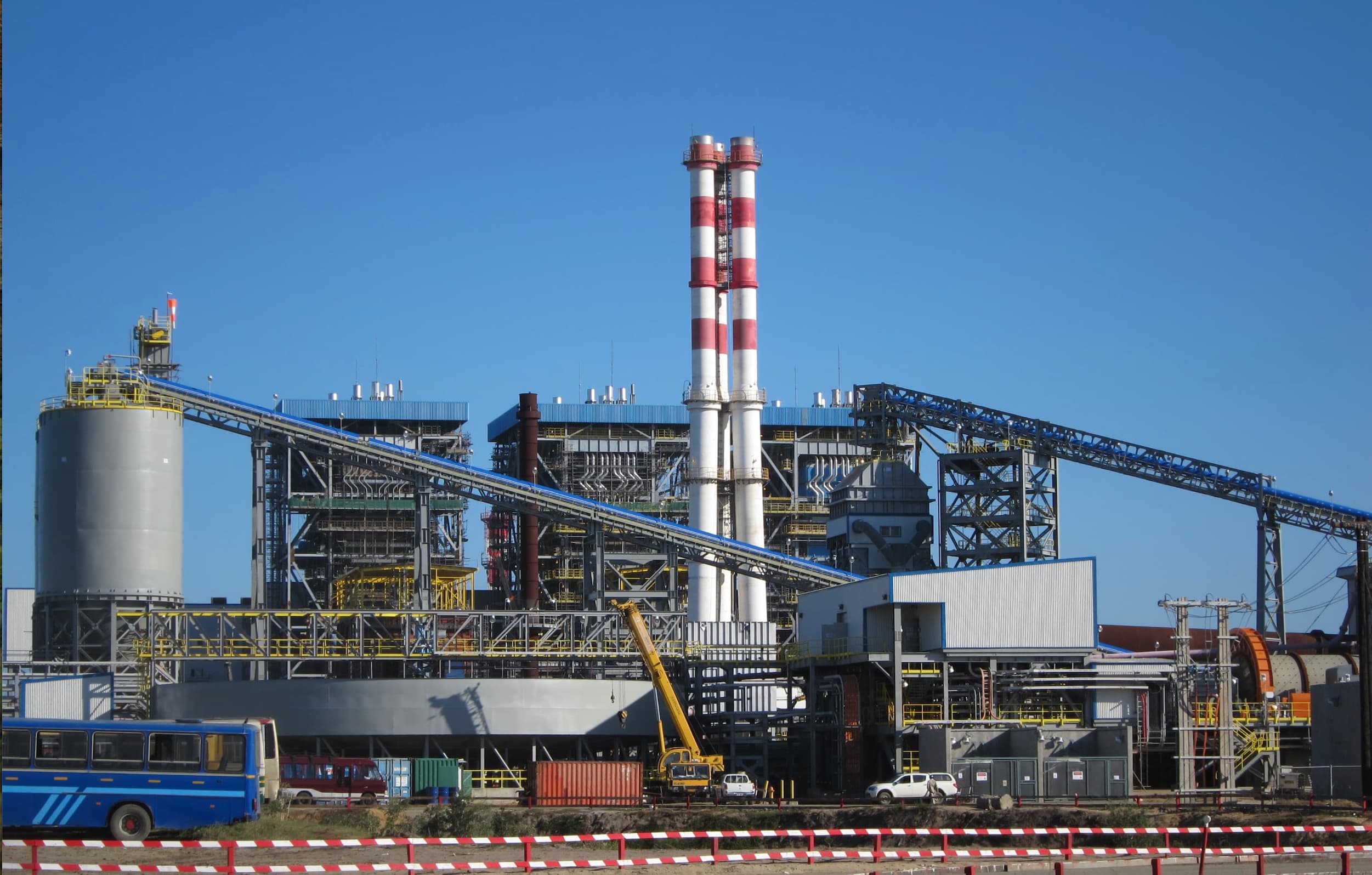
An industrial chimney works based on the principle of natural draft and thermal buoyancy. Hot gases produced from industrial processes are lighter than cold air, so they naturally rise through the industrial chimney structure and are released at a higher altitude.
A typical industrial chimney system includes:
Combustion source (boiler, furnace, or turbine)
Flue gas ducts
Draft control system
Chimney liner
External shell (steel or concrete)
Emission monitoring system
The working process of an industrial chimney can be summarized as follows:
Fuel is burned in industrial equipment (e.g., boiler or furnace).
Hot gases are generated and directed into the boiler chimney or exhaust duct.
The gases enter the industrial steel chimney or steel chimneys structure.
Due to thermal buoyancy, gases rise naturally upward.
Pollutants are dispersed at a higher altitude to reduce ground-level concentration.
Modern Industrial Chimneys often include mechanical draft systems such as fans to improve efficiency, especially in large-scale industrial applications.
Types of Industrial Chimneys
There are multiple industrial chimney types, each designed for specific industrial environments and emission requirements. Leading chimney factory designs categorize them based on structure, material, and functionality.
Steel chimneys are widely used in modern industries due to their durability and ease of installation. A stainless steel chimney is especially popular in corrosive environments.
2. Concrete Chimneys
Used in power plants and heavy industries where extreme height and stability are required.
3. Brick Chimneys (Traditional)
Older form of industrial chimney structure, now mostly replaced.
4. Modular Industrial Chimneys
Pre-engineered chimney systems assembled on-site.
5. Boiler Chimney Systems
A boiler chimney is specifically designed to handle high-temperature flue gases from steam boilers.
Comparison Table of Industrial Chimney Types
| Type | Material | Durability | Cost | Application |
|---|
| Steel Chimney | Carbon/SS Steel | High | Medium | Manufacturing plants |
| Stainless Steel Chimney | SS304/316 | Very High | High | Chemical & marine |
| Concrete Chimney | Reinforced Concrete | Very High | High | Power plants |
| Brick Chimney | Brick/Masonry | Low | Low | Small industries |
| Modular Chimney | Hybrid | High | Medium | EPC projects |
Each industrial chimney type is selected based on emissions, temperature, and industry requirements.
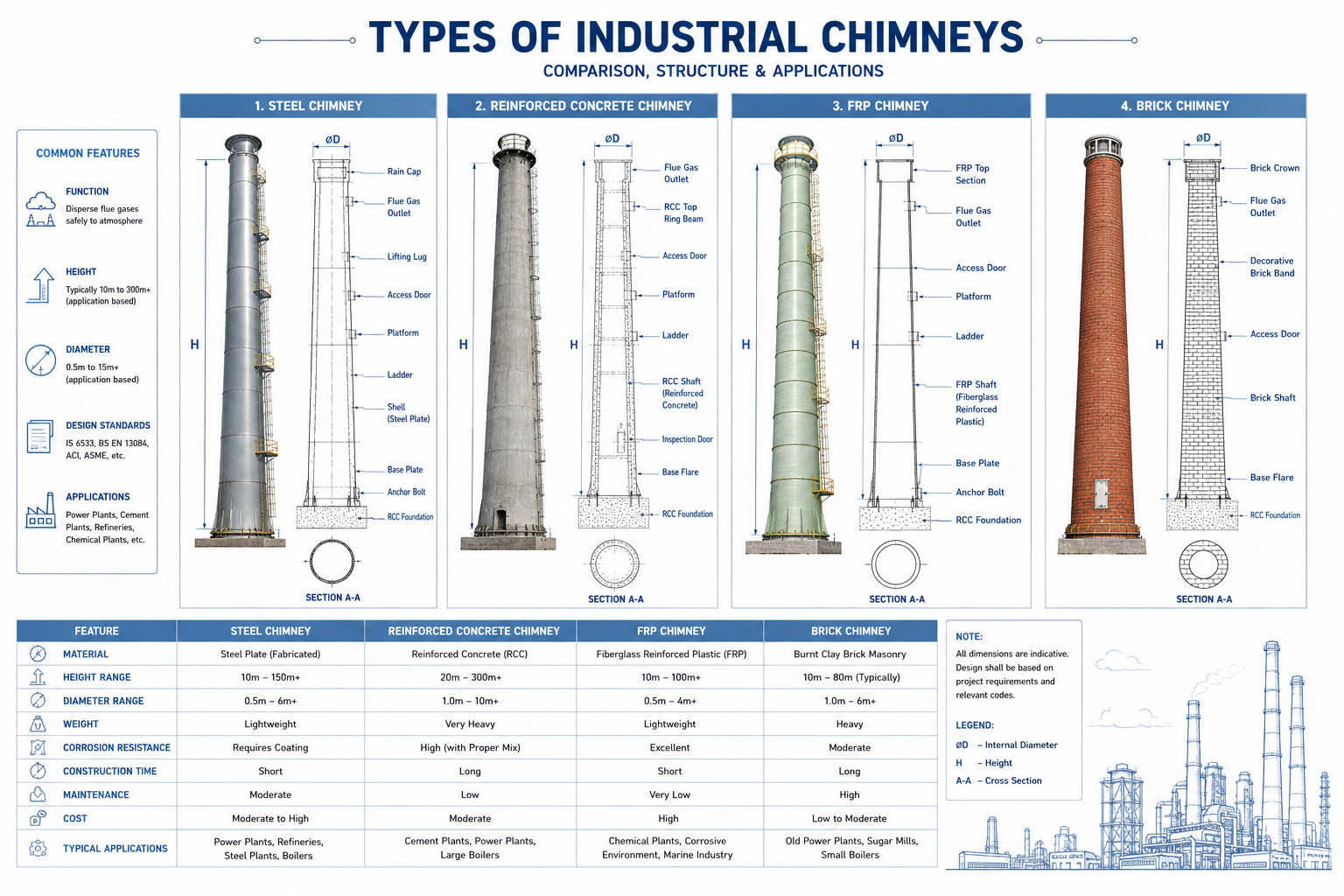
Industrial Chimney Design Considerations
Effective industrial chimney design is crucial for performance, safety, and regulatory compliance. A professional chimney manufacturer evaluates multiple engineering parameters before finalizing a design.
Key design considerations include:
Gas volume and flow rate
Temperature of exhaust gases
Wind load and seismic conditions
Corrosion resistance
Emission dispersion height
Structural stability of industrial chimney structure
Modern Industrial Chimney Systems also integrate CFD (Computational Fluid Dynamics) simulations to optimize airflow and dispersion.
A well-designed industrial chimney ensures:
Industrial Chimney Materials
The performance of an industrial chimney heavily depends on material selection. Common materials used in Industrial Chimneys include:
1. Carbon Steel
Used in standard industrial steel chimney applications.
2. Stainless Steel
A stainless steel chimney is resistant to corrosion and ideal for chemical industries.
3. Reinforced Concrete
Used in large-scale steel chimneys and power plants.
4. Alloy Materials
Used in high-temperature and high-corrosion environments.
Material Comparison Table
| Material | Corrosion Resistance | Cost | Lifespan |
|---|
| Carbon Steel | Medium | Low | 15–25 years |
| Stainless Steel | High | High | 25–40 years |
| Concrete | High | High | 30–50 years |
| Alloy Steel | Very High | Very High | 30+ years |
Selecting the right material ensures long-term efficiency of the industrial chimney system.
Industrial Chimney Applications
The application scope of Industrial Chimney Applications is vast across industries. An industrial chimney is essential wherever combustion or industrial heating occurs.
Key industries include:
Power generation plants
Cement manufacturing
Chemical processing plants
Steel production facilities
Oil refineries
Food processing factories
Boiler-based heating systems
In all these sectors, the industrial chimney ensures safe emission of flue gases and compliance with environmental standards.
For example, in a steel plant, a large industrial stack handles high-temperature exhaust gases, while in chemical plants, corrosion-resistant chimney systems are required.
Industrial Chimney Emission Standards and Regulations
Environmental compliance is one of the most important aspects of industrial chimney design.
Different countries impose strict emission regulations on Industrial Chimneys, including:
Common global standards include:
EPA (Environmental Protection Agency – USA)
EU Industrial Emissions Directive
ISO environmental standards
Local environmental protection laws
A compliant industrial chimney ensures:
Reduced environmental pollution
Legal operation of industrial facilities
Improved sustainability performance
Modern chimney solutions often include scrubbers, filters, and monitoring sensors integrated into the chimney system.
How Tall Should an Industrial Chimney Be
The height of an industrial chimney is determined by dispersion requirements and environmental regulations.
Key factors include:
Type of industry
Volume of emissions
Wind speed and direction
Local environmental laws
Typical height ranges:
| Industry | Chimney Height |
|---|
| Small boiler systems | 15–30 meters |
| Manufacturing plants | 30–80 meters |
| Power plants | 100–300 meters |
| Heavy industrial complexes | 200–400 meters |
A taller industrial chimney helps disperse pollutants over a wider area, reducing ground-level concentration.
Industrial Chimney Cost Factors
The cost of an industrial chimney depends on multiple engineering and operational factors.
Key cost drivers include:
Height of chimney
Material type (steel, stainless steel, concrete)
Complexity of industrial chimney structure
Installation location
Corrosion protection requirements
Engineering and design services from industrial chimney manufacturers
Cost breakdown example:
| Cost Component | Percentage |
|---|
| Materials | 40–50% |
| Engineering design | 10–15% |
| Fabrication | 20–25% |
| Installation | 10–20% |
| Maintenance systems | 5–10% |
A well-designed chimney solution helps reduce long-term maintenance costs.
Why Choose a Professional Industrial Chimney Manufacturer?
Choosing experienced industrial chimney manufacturers ensures safety, performance, and compliance.
Key advantages include:
Customized chimney systems
Advanced industrial chimney design
Compliance with global emission standards
High-quality fabrication in chimney factory
Long-term durability and service support
A professional chimney manufacturer provides complete EPC support including design, fabrication, installation, and commissioning of Industrial Chimney Systems.
This ensures that the industrial chimney performs efficiently under extreme industrial conditions.
Request a Custom Industrial Chimney Solution
Every industry has unique requirements, and a standardized approach is not always effective. A customized chimney solution ensures optimal performance, safety, and compliance.
Rainbow as a professional industrial chimney manufacturers provides:
Site-specific industrial chimney design
Material selection based on environment
Custom industrial chimney structure
Integrated emission control systems
Turnkey EPC solutions
If you are planning a new plant or upgrading existing Industrial Chimneys, a tailored engineering approach ensures maximum efficiency and long-term reliability.
FAQs About Industrial Chimneys
What is the purpose of an industrial chimney?
The primary purpose of an industrial chimney is to safely release flue gases and combustion byproducts from industrial processes into the atmosphere. It helps improve air dispersion, protects workers and equipment, and ensures compliance with environmental regulations.
Why are industrial chimneys so tall?
Industrial chimneys are built tall to disperse pollutants over a wider area and reduce ground-level concentrations. Greater height improves air quality around industrial facilities and helps meet environmental emission standards.
What is the height of industrial chimney?
The height of an industrial chimney varies by application. Small boiler systems may use chimneys between 15–30 meters, while power plants and large industrial facilities often require stacks ranging from 100–300 meters or more.
What were industrial chimneys used for?
Historically, industrial chimneys were used to vent smoke and combustion gases from factories, mills, and power plants. They played a key role in improving workplace safety and reducing smoke accumulation within industrial buildings.
What do you call an industrial chimney?
An industrial chimney is also commonly known as an industrial stack, flue stack, exhaust stack, or emission stack. These terms generally refer to structures designed to discharge industrial exhaust gases safely.
Why are industrial chimneys made tall?
Tall industrial chimneys improve the dispersion of emissions by releasing gases higher into the atmosphere. This reduces pollution concentrations near the ground and helps facilities comply with air quality regulations.
What are industrial chimneys used for?
Industrial chimneys are used in power plants, chemical facilities, steel mills, cement plants, and boiler systems to vent exhaust gases, improve operational safety, and support environmental compliance.
What are industrial chimneys made of?
Modern industrial chimneys are typically constructed from carbon steel, stainless steel, reinforced concrete, or specialized alloys. Material selection depends on operating temperature, corrosion exposure, and structural requirements.
What are the gases emitted by industrial chimneys called?
The gases released through an industrial chimney are commonly called flue gases. They may contain carbon dioxide, nitrogen oxides, sulfur oxides, water vapor, and trace particulate matter depending on the fuel and process.
What regulations apply to industrial chimneys?
Industrial chimneys must comply with local and international environmental regulations, including emission limits, stack height requirements, structural safety codes, and monitoring standards established by environmental authorities.
How long does a steel chimney last?
A properly designed and maintained industrial steel chimney can last between 20 and 40 years. Lifespan depends on operating conditions, corrosion protection systems, material quality, and maintenance practices.
What standards apply to industrial chimney design?
Industrial chimney design typically follows structural engineering codes, wind and seismic standards, environmental regulations, and industry-specific guidelines to ensure safety, durability, and reliable performance throughout the service life.
How often should industrial chimneys be inspected?
Most industrial chimneys should undergo a detailed inspection at least once a year. Facilities operating in harsh environments or under heavy usage may require more frequent inspections to ensure safety and compliance.